Week 24, February 20th

This week marks the beginning of the end of our in-depth exploration of World War II. We saw our students working hard and completing their group creative projects of the theaters of the war, and as we can see in our chronological “narrative” of the war, things are looking bleak for the Nazis and it is only a matter of time before the war will reach it’s conclusion. This week was an amazing example of all of the great work our students at Plato can create when they dedicate their time and efforts to creating high-quality reflections of their studies that expertly demonstrate their content knowledge, along with their writing and creative skills! Another element of these projects that I am particularly proud of is the assessment portions, student groups were tasked with making a quiz or assignment for their peers so they can demonstrate their learning from their creative pieces that were presented, and I have seen both some amazing questions being asked by the presenters as well as a great ability to understand their pieces and recall information by their classmates. The greatest way for someone to demonstrate their learning is to teach, and from what I’ve seen this week our students clearly understand the content of their projects at a very deep level!

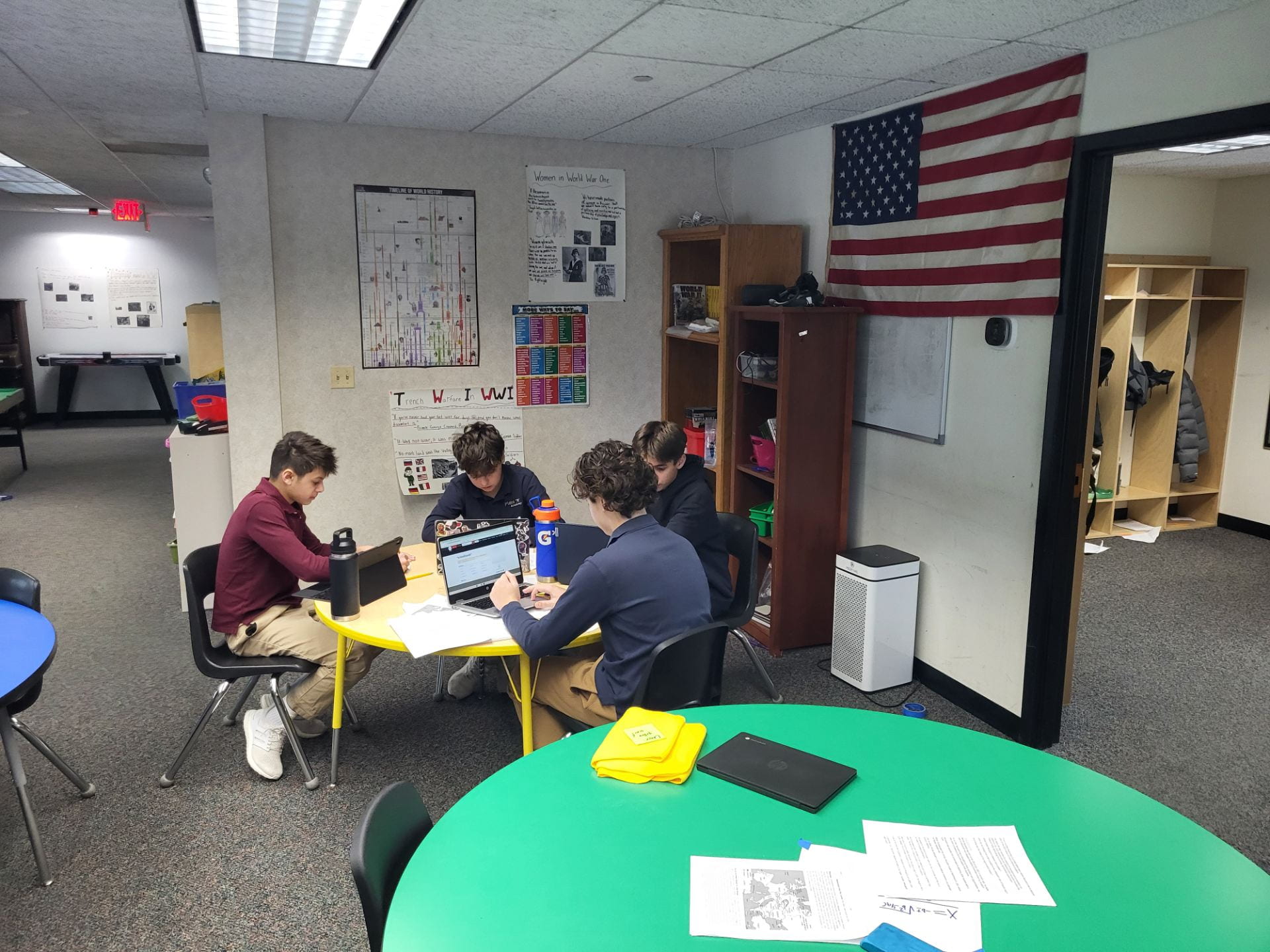
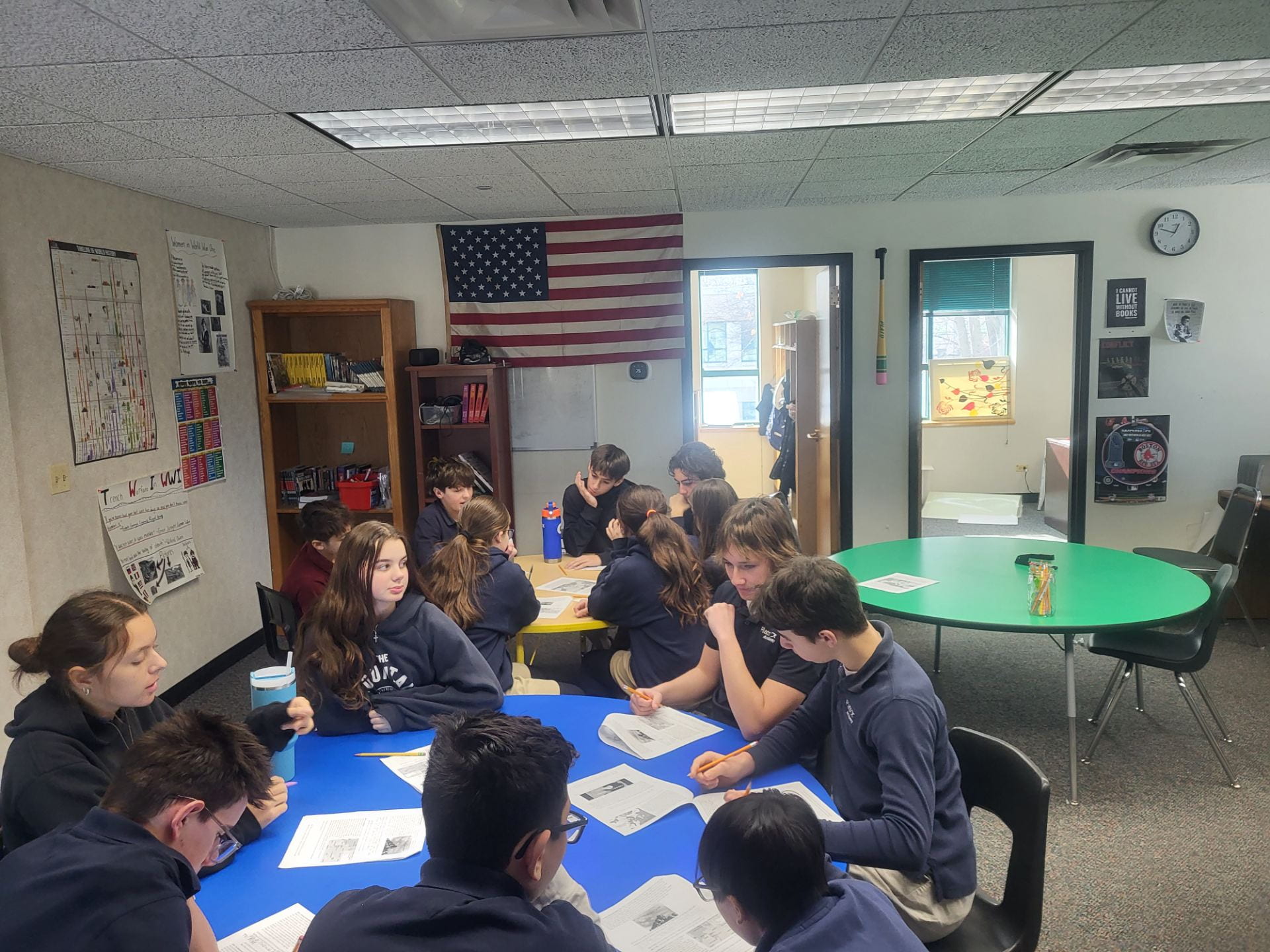
Tuesday students focused on the research and organizational portion of their projects. Most students got the opportunity to read and analyze one source last week, so to start off our new week they looked at additional sources, taking notes on a graphic organizer and tracking their bibliographical information such as author, publisher, and date published or accessed. This part of the project was to continue building their research and note-taking skills, as well as their critical thinking skills by making them question whether their source would be useful to their projects and what kind of claims it would allow them to make within their projects. Tuesday’s classwork was a great opportunity to check in and see what the progress of each group was, and also it was exciting to see the creative elements of the projects begin to emerge as students organized their thinking and started to create their actual final products in the afternoon.

Tuesday also saw Mr. Joe and Ms. Mary’s classes participating in an amazing safety and security presentation with none other than Plato friend ‘AK’ Mr. Kereakes! Using a wealth of knowledge from his experience in both private and public security working with the US armed forces as well as various Police departments, AK was able to give plenty of helpful advice on first aid, trauma medicine, and what to do during a school shooting type event. Students had a great time and learned a lot in the process, and got some practice doing things like packing wounds, putting on tourniquets, and disarming threats. It is obviously very unfortunate that we have a need to be prepared for things like this, but it is always good to be able to not be helpless if something were to happen, and much of this advice was not Plato specific so students will be able to take it with them as they continue to grow and move on to other schools!

Wednesday was another work day for student projects, as all groups finished up their research and began to finally move on to the product phase of their Theaters of WWII assignment. Wednesday also saw yet another productive day of writer’s workshop, so let’s take a look at what Ms. Debbie has to say:

“In the Writers Workshop this week, we started a unit about the structure, methods, and types of paragraphs. As a basic building block of any essay or other long-form writing, it’s an essential element on which to focus. From dissecting the paragraph line by line to forming a paragraph from scratch, the class will practice and complete paragraphs that will be used in academics or careers in the future. The goal will be to create a full essay with an introduction, body, and conclusion, whether for a research thesis, reflection assignment, or blog post!”  

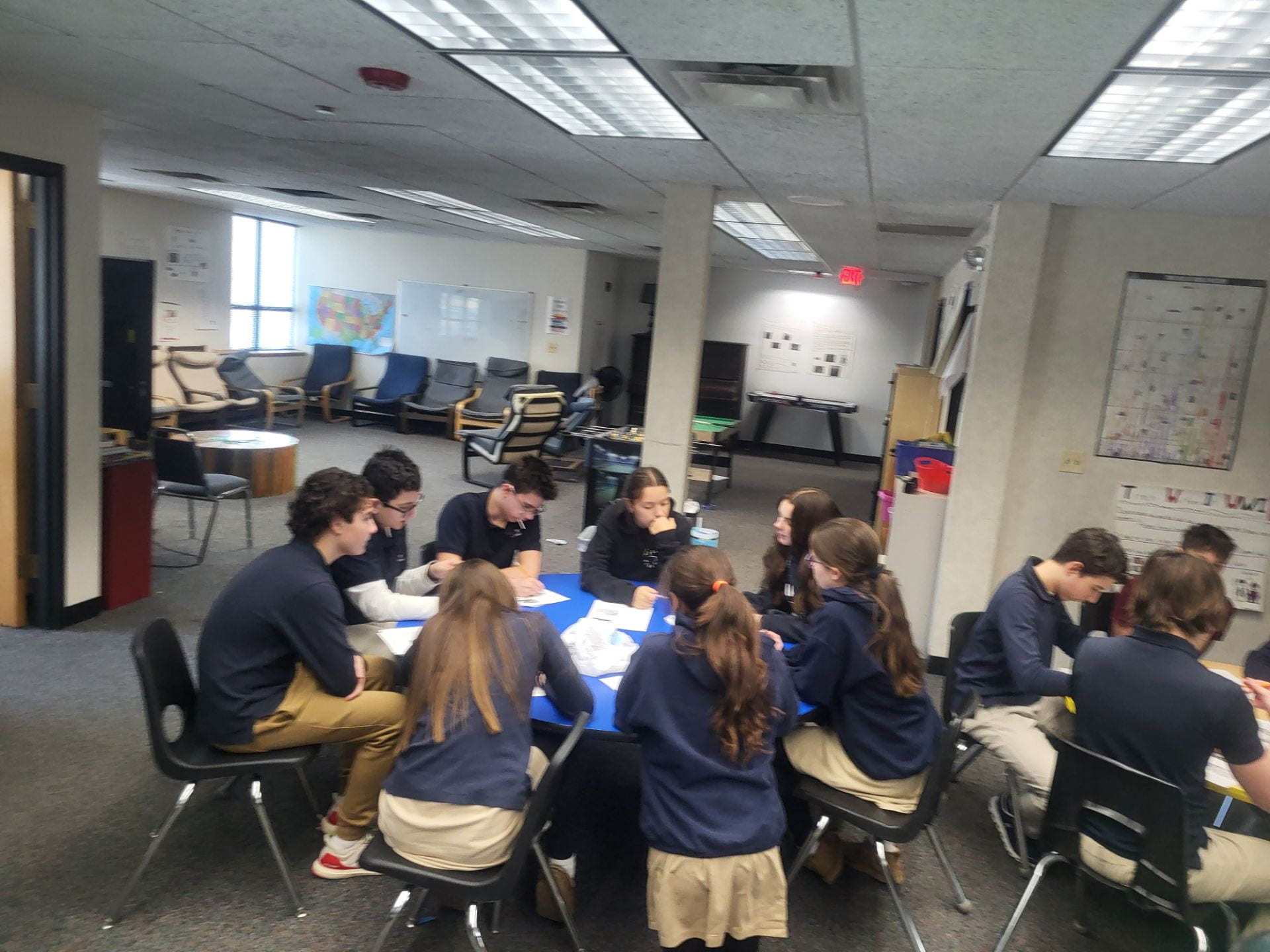
Thursday students had their final full work day for their Theaters of WWII Project, as most groups were able to finish their product and move on to the assessment portions of their projects. Most groups decided to use an exciting online quiz platform, either kahoot or blooket. These are great services that allow for an easy and intuitive creation of quizzes that are engaging but still allow students to test out their understanding of a topic. It was a proud teacher moment for me on Thursday to see everyone working so well independently, and I was especially impressed by the cohesion of our teams, everyone did a fantastic job of delegating responsibilities and making sure to hold each other accountable and to stay on task, it definitely made my job a whole lot easier!

Friday students had one final bit of work time to put some finishing touches on their products and to make sure their quizzes were all put together, submitted, and accessible for the rest of the class. We had some great “presentations” which included students getting to read the newspapers published by our groups that were responsible for covering the Italian campaign by the US Armed forces, as well as the combined conflict of the US and UK fighting against the Nazis and Italian fascists in North Africa. The groups made some very impressive newspapers that look like they could’ve come straight out of the early 40’s! A feat made even more impressive considering most of them have a very limited exposure to physical newspapers (sorry for making you feel old, dear reader). Students also had a lot of fun racing each other to the top of the leaderboard doing the Kahoot and Blooket quizzes that their classmates created for them. But it wasn’t just fun, it was a great assessment of student learning, and based on the quiz results, our students who wrote newspapers did a great job of educating their classmates. I look forward to next week when we’ll get to see our other two groups present Monday morning!

Science with Ms. Pam: This week with Ms. Pam students learned about some of the physics and biological processes that allow for birds to fly and for many large and small mammals to hibernate. Students also got work time to keep developing their independent study projects.

Week 23, February 13th

We have reached the conclusion of another exciting week in Mr. Joe’s class, and even though our week may have been abbreviated our learning was not! We continued our in-depth exploration of World War II by wrapping up the Battle of Britain while also introducing a new project that will have students exploring the various theaters of World War 2 that make up many of the most important moments and decisive turning points of the war. We also wrapped up a writing exploration of personal narrative and introduced a new assignment where students will be writing for a Stossel competition, and we also kept up with our Math and Science explorations we have been engaged with over the past few weeks!

Tuesday we concluded our mini-study of the Battle of Britain by having the students look at an iconic primary source: Churchill’s “finest hour” speech. Students listened to a recording of the speech while also reading along with the transcript, while answering a series of reflection questions relating to the speech to ensure their understanding of the key concepts and helping them to think about the purpose of the speech and the impact that it made. Friday students got a good sense of how the Battle of Britain was fought and won, but Tuesday they got to understand the immense strain it put on the British population, and how the British leadership of the time was able to unite people and build their resolve in order to keep the nation from capitulating to the Nazi pressure. After engaging with Churchill’s speech, we had a class discussion reviewing the details of the Battle of Britain and what their population stood to lose if they allowed the fascists to take over their country, and then later looked at another unique aspect of the British experience during the war (and partially after the war): rationing. Students viewed a video about what rationing looked like, including what ration books were and what was inside of them, as well as looking at some of the kinds of foods British people ate due to the rationing of many preferred imported foods, cuts of meats, and baked goods. Some of these included SPAM, pigs feet, and powdered eggs; and some rationing measure were put into place until the 1960’s, which would explain how British food got the reputation it has today.

Wednesday students had a quiz on the Battle of Britain and everything they have learned so far. It was a short response quiz that included questions about some of the new technologies introduced during the battle, some of the challenges facing the home front, and some of the key concepts like British innovation and morale against German innovation and motivation. Students did a great job recollecting, reflecting, and sharing their thoughts regarding what we learned for the battle of Britain. Wednesday also saw another Writer’s workshop with Ms. Debbie, here’s what she had to say: “In Writers Workshop, the final draft of our first essay, a personal narrative, finished every step of the writing process! Students prepared their documents for publishing and submitted for review. Using the writing process for the first time with the personal narrative walked students through experiencing each step and gave time to practice this process. Now, we will apply the process to future writing assignments in Writers Workshop and beyond! Next, we are working on an essay to enter into the Stossel in the Classroom contest!”

To finish up Wednesday, I introduced a new assignment that the students will be working on for the next week: the theaters of WW2 creative group project. This project tasks the students with working alongside their classmates to tell the story of one of four major theaters of the war (Russia, Italy, North Africa, Japan). The groups were allowed to choose what type of product they would like to create to tell their story, this could be anything ranging from a tiktok/podcast to a play or puppet show, newspaper, photo collage, photo essay, a timeline, or anything else they could think of to tell their story! I wanted them to think outside the traditional box of just posters and power points, and to give them some agency over where they believe their strengths lie.

Thursday the students got some time to begin working on their projects. They first had time to discuss what kind of product they wanted to make, and then were given some resources and guidance to begin their research process. Since this is not our first research project of the year, students were expected to have a strong foundation to build off of in terms of research skills, and I was very excited to see how their skills in research had grown. They did a great job of vetting their sources and filling out some information to help with their citations, and then I saw many students taking great notes on their findings, and I had a lot of great conversations with students about their topics, and answered a lot of great questions. It was a fun and productive day, and I was very proud to see such great self-directed hard workers in my classroom!

Friday was a very busy day as we celebrated Valentine’s day here at the Plato Academy! We started off the morning by having a great showing for our Brew Crew coffee shop! Thank you to all of our parents and community members for their purchases and donations! Afterwards we had a class meeting to go over some strategies to help make our coffee shop safer, more efficient, and better at accomplishing our goals. The students had some great ideas and did a fantastic job leading the meeting and addressing concerns pointed out by some of our staff and parents. Later on we took some time to finish up our weekly trivia competition, and in the afternoon we took some time to set up our portfolios on Bulb. Bulb is a website that allows for the creation of internet sites to easily post and view information in a blog format. We will be using it for our class portfolios in conferences in lieu of using the traditional paper manila folders and Google drive combination that we have used in the past. Students were able to get their pages set up and post their first products to the portfolios: their “road to WWII” Slides presentations. After we got the portfolios set up we took some more time to work on our research projects. I suggested the students should take the time to arrange what each group member can do over the weekend to be as prepared and organized as possible to be efficient with their work time coming up on Tuesday when we return. I’m excited to see how our students react to a new challenge that they will absolutely have to be prepared to face in high school in the form of take-home group projects. Teamwork and coordination are essential skills in this life, so it will be great to get our students some practice with those skills!

Week 22, February 6th

We have reached the end of yet another exciting week here in room 214 and athletics are at the front of everyone’s mind as we had two different amazing athletic-related activities that our class participated in this week: the Windy City Bulls game and the schools’ celebration of the 2026 Winter Olympics! But this week wasn’t all about sports, as we had some more great opportunities to learn and build on our academic skills to go along with our athletic passions!

Monday we wrapped up our mini-exploration of the Nazi occupation of France and French Resistance movement. Students looked back at their materials from last week’s study of the French Resistance, and also looked at some examples of WW2-era newspapers from many countries including France to create a “front page” of a Resistance newspaper of their own! They not only designed the layout and included imagery of their choice, they also filled the shoes of WW2 resistance journalists by writing some articles inspired by some of the forms of resistance that they were already made familiar with last week, as well as other real-life events such as the fall of Paris, the battle of Stalingrad, and D-Day. This was a great opportunity for students to engage with real-life primary sources from the era, and deepened their understanding of some of the actions of the French Resistance, and the different ways people can resist tyranny, all while expressing their creativity, and has definitely been one of my favorite activities of the WW2 unit so far!

Tuesday we started up our next sub-unit of the WW2 exploration: the Battle of Britain (otherwise known as a ‘the blitz’). For their introduction to the Battle of Britain students viewed a pair of short documentaries that highlighted some of the technology that allowed for the battle to be fought almost exclusively in the air, and looked at some of the most famous airplanes of the era that are well-known for being the ‘saviors of Britain’ to this very day. These planes included the Spitfire, the Hurricane, and their German counterpart: the Bf-109. By seeing some of the specifications and capabilities of these different planes students could see how the British were initially facing an uphill battle and were numerically and technologically outmatched, but once they started production of the Spitfire they turned the tables and managed to save their home through their courage and their engineering. Students also got to hear stories from the pilots of these famous airplanes, to see what the conditions were like for airmen fighting the battle of Britain, and to hear how extreme some of the fighting as well as how physically demanding it can be to fight an aerial war. Students then completed a set of reflection questions that had them imagine if they were a Hurricane/Spitfire pilot, and we had a class discussion on how the Battle of Britain went and what some of the advantages, disadvantages, and pivotal moments were. Tuesday afternoon students got a chance to prepare some short presentations for the younger classrooms to inform them about the Winter Olympics in preparation for our schools’ Olympic celebration later in the week! students pulled up all sorts of interesting facts and imagery to help build the excitement for our younger friends!

Wednesday students got a chance to go around to the younger classrooms and present their information about the Winter Olympics! It was great to see everyone have so many positive interactions with the younger members of our community and to build up their excitement and curiosity about the upcoming Olympics, which are of course a very proud tradition dating back to Greece but now enjoyed worldwide! I would like to reiterate how proud I am of our students, they did a fantastic job and are serving as great role models, and also answered questions to the best of their ability, great work everyone! As a reward for their success, we started our long-term trivia competition back up, and used the rest of our very limited time to build our knowledge and teamwork before writing workshop. During writer’s workshop students moved on to the next part of the writing process to develop: editing and review. students looked back at the drafts of their personal narratives and marked them up for any errors or areas with room for improvement, and then later went on to start to make those changes by working on their final drafts which we will likely finish next week. Its awesome to see everyone’s writing skills and familiarity with the writing process growing so quickly!

Thursday we participated in an annual Plato Academy tradition: the Windy City Bulls game! It was education day for the Windy City Bulls so our school was one of many in attendance, and our students got a chance to let loose and have some fun while also getting out and engaging with their community. We also got the special honor of being invited to stand on the court for the national anthem, we all had a great time and continued to represent Plato Academy incredibly well outside of the school. Days like Thursday leave me fully confident in our ability to have a great and safe time on the class trip later this year.

Friday we concluded the week by resuming our study of the Battle of Britain. But first our school kicked off our Winter Olympics celebration by having our own ‘opening ceremony’. Room 214 did a great job leading the parade of nations before our brief torch lighting, and I would like to shout out Teddy Athans for doing a great job as the torch bearer for our class, and our class country: Norway. After we got back to class, we began a simulation role-playing game that explored the battle of Britain. Students were broken up into 4 “divisions”, 2 for the RAF, and 2 for the Luftwaffe. Within their divisions each student had a role, either the commander, logistics officer, intelligence officer, or weather officer. Students learned all about the different roles and how their real-life counterparts would have to make decisions, and students were tasked with making a series of tough choices based on scenarios they were presented with. Based on their responses, students could either get a positive or negative modifier for a dice roll, and then the dice roll would determine the outcome of the battle. Students also had to decide how to allocate resources, where they should place more or fewer resources, and how new technologies like RADAR became a huge advantage for the Allies in the Battle of Britain. The game saw the RAF eke out a hard fought victory, showing how difficult it was and how unlikely the British victory actually could have been. After this students reflected on their strategies, the intelligence they received, the outcomes of the battles, and the moral implications of Aerial warfare while also having a lot of fun competing with their friends. It was another great activity in terms of both fun and being able to learn a lot about that specific phase of WW2 through experience!

I look forward to seeing everyone back in class on Tuesday as we move on to some of the other theaters of World War Two, and begin our class novel study which will tie into our Holocaust unit which will directly follow the World War Two unit. I hope everyone has a safe and relaxing Super Bowl weekend, and I will see everyone on Tuesday 🙂

Week 21, January 30th

This week was a week where we covered a topic that I find one of the most interesting and inspiring among all of the incredible stories of World War Two, and that is the topic of resistance. We had a series of lessons that explored what life was like under the Nazi regime, and we looked at all of the ways that people tried to resist totalitarianism, both young and old. It came at a perfect time too, as America commemorated Holocaust memorial day this week, and we got to take the chance to reflect as a class on the dangers of dictatorships, and the costs of freedom, which are both a major theme of our class curriculum this year as well as some of the most vital ideas I feel obligated to teach as a social studies educator.

Monday we started out by taking a look at the scenario facing the French people in the winter of 1940 and spring of 1941. In a brief presentation I gave to the students they learned about the blitzkrieg and how the Maginot line was overwhelmed and circumvented by the Nazis, and how French morale was so low combined with their still-recovering economy that allowed for the Nazis to take over the country in under two months. Students learned about the Vichy French puppet government, and about the heroic evacuation at Dunkirk. After the presentation we began our multi-day study of the French resistance movement, in which students did a 4 part activity where they would look at some primary sources from different French people on how they survived and resisted the Nazis and more importantly why they made these decisions. The second station involved students working with an interactive online timeline that covered the events of the French resistance and the campaign to liberate France by the Allies. Students were introduced to two major events we will later go into detail on in the not too distant future: Operation Torch and the D Day invasions. Thanks to these two operations both working as planned for the Allies, French resistance was able to link up with Allied forces to fight a two front war against the Nazis, and push them back out of France within just a few months after fighting in Italy and North Africa for years. The timeline also gave students a chance to see some videos of the war, to which many asked if they were real, and I was able to confirm that yes even in World War Two there were many courageous journalists who carried cameras rather than rifles into battle.

The third fourth stages involved looking at some more vocabulary words to understand to help them with the activity and beyond, and finally students got to try out their puzzle solving skills by trying to decode and re-code some encrypted messages. Encryption and intelligence obviously played a huge role in the resistance movement, so it was exciting to give students some hands-on experience with it. In the decryption activity students would have to first have to copy from a collection of accented letters into Greek letters, then from Greek letters to numbers, and finally from numbers to English. I had a very funny interaction with some students when they pointed out that the Greek message didn’t make any sense, and I had to let them know that they were only partially done with the decoding. In retrospect I probably should have seen how this activity could be potentially confusing for Greek speakers, as the lesson is obviously designed for people with no understanding of Greek (LOL).

Tuesday we participated in Holocaust Awareness Day by viewing the film ‘Truth and Treason’ from 2024. It was a fantastic film that tied into our course material for the week in a direct and apparent way, as students got to see what life was like for Germans under the Nazis after getting an introduction as to what life was like for the French. The film tells the story of a German teenager who is a gifted writer but whose friend is taken by the Nazis after the process of the Holocaust begins. He resists by writing an anti-Hitler pamphlet on a regular basis and cooperating with his friends to deliver it across the city of Hamburg. They are later caught and the story explores the corruption and injustice of the Nazis, and how standing up to these injustices could inspire others to eventually do the same. It was both a haunting reminder of the tragedies of the Holocaust and an inspiring catalyst to reflect on injustices we can see in our own community, and how we can struggle to fix those injustices even if we may see ourselves as “too young” or “too powerless”. Tuesday we also celebrated “School Choice Week”, where students participated in a dance video to help raise awareness for the importance and value of enabling choices in education across our country,

Wednesday we finished the film, and used the rest of our limited time together to have a wrap-up discussion on what we learned from the film, how it connected to what we have previously learned in class or in the past, and again ways that people have fought injustice and promoted change within their own communities. Wednesday also saw another chance for students to have writer’s workshop with Ms. Debbie, where we continued to explore the writer’s process by finishing up with brainstorming and beginning the drafting process. Students took some time to think about what personal experience they wanted to write about and broke it down into parts such as where they were, who they were with, what happened, and how they felt, using a graphic organizer. When students concluded this they began the process of organizing their writing materials, and beginning to think about how they want their rough drafts to look.

Thursday we finally had enough in-class time to finish up our French resistance activity, so we used the rest of class time for that day finishing up. This week we also introduced a pair of new in-class daily routines that I believe will help with their geography knowledge as well as their overall world knowledge. First is the “country of the day”, students are now keeping a journal of a randomly-selected country each morning, where they will mark the Capital, population, demonym, and some facts about each country. I have found its a great way to wake everyone up in the morning, and build community by having some light informal conversation about the country of the day and what we know about it or would like to learn about it. We have also started a long-term trivia contest, where teams will compete in trivia each day in our 20 minute period we have between PE and Greek class for the first 3 days of the week, or between afternoon specials on Thursday and Friday. The winners will get a yet to be determined prize each week.

Friday I unfortunately had to miss due to an illness, but the students took an excursion to a Greek Orthodox Church in Libertyville. This was a great chance for our Orthodox students to participate in the feast of the three Hierarchs, and for our non-Orthodox students to get to experience some Greek culture and some experience with another religion so that we can compare, contrast, and share experiences. As a Social studies teacher I obviously see a ton of value in sharing experiences from other cultures and our own, so I was very excited to get our students an opportunity to learn about a new culture or share their own.

Math with Mr. Zafeiris: This week, we completed our unit on quadratics and learned how to solve quadratic equations using the quadratic formula. We also introduced trigonometry by explaining the Pythagorean Theorem and solving a variety of related exercises and real-world problems. In addition, we explored and solved problems using the converse of the Pythagorean Theorem, carefully analyzing the sides of triangles to help students understand the importance of trigonometry. The students are doing an excellent job! We will continue our hard work with the goal of helping them become confident and skilled in Algebra, Geometry, and Trigonometry.

Week 20, January 23rd

I hope everyone is staying warm as we come to a very chilly end to our abbreviated week here at Plato Academy. Despite the shorter than usual amount of time together, we still had a busy time in room 214 as we continued our exploration of WWII, got further into our writer’s workshop, and developed our knowledge and skills in algebra and science!

Tuesday we came back from our long weekend by starting off a brief study on some of the most important aspects of the beginning of World War Two: the rise of Benito Mussolini and fascist governments, and the appeasement of Hitler that allowed his aggression to continue to the point of starting a global conflict. The students first completed a reading of a biographical piece about Benito Mussolini and together as a class we examined the timeline of events and answered a series of questions about Mussolini, and his fascist party. We also took a deeper look at the strategies and tactics that the fascists used to seize power over the Italian state, and how this dramatic takeover further lead to the build up of tension in Europe before the outbreak of World War Two. We were also able to compare and contrast the rise of Mussolini with the rise of Hitler, nothing that many of their tactics were similar, as Hitler looked to Mussolini as an inspiration for his own ambitions. Upon completion of our readings and discussions, students were tasked with writing a brief summary reflecting on whether they believed Mussolini was an effective military leader, using evidence from the readings and discussions to provide evidence for their claims.

After we finished our study of Mussolini and his impact on the outbreak of WWII, we took a look at the process of appeasement, and how it led to the emboldening of Hitler’s fascist government, eventually leading to the invasion of Poland and the descent of Europe into yet another global conflict. Students were divided into four groups and tasked with role playing one of four major European powers from the 1930’s: Great Britain, France, Italy, or the USSR. Groups would be presented with one of Germany’s aggressive actions, (i.e. rearmament, occupying the Rhineland, annexing the Sudetenland.) and each group would have to respond in character as to whether they would choose to invade Germany over these offenses or not. If 3 groups could decide together to invade, then the war would begin and Germany would be stopped. However students saw that due to each of their own individual objectives and agendas, it was basically impossible to get the support necessary to realistically start and win a war against Hitler’s Germany. This activity allowed students to engage with history on a much deeper level, as by putting themselves in the shoes of world leaders of the 30’s, they could see how despite hindsight being 20-20, it was a very difficult decision to intervene and fight against Nazi Germany. We also got to build student’s critical thinking and rhetorical skills through the nature of the activity.

Wednesday we continued our study of appeasement by viewing the video: Appeasement: 10 Steps to WW2 by History hit on Youtube. This documentary goes through the process of appeasement, including reasons why the Nazis were doing what they were doing, how they justified their actions, and why the rest of the international community did not respond. As we viewed the video students took notes on each of the events and their significance, and we later got to a wrap-up discussion on appeasement in which the kids did a great job sharing their thoughts on the failures of the leaders of that era, and the justifications for their failures. Wednesday we also had yet another writer’s workshop with Ms. Debbie, who summarized her class as follows:

“It was an eventful Writers Workshop as we reached a core part of the course in which we discussed the Writing Process, a key method to developing writing skills. We looked at all the steps as a group, practiced the first step together, and then the students tried this step on their own in conjunction with the start of our first writing project, The Personal Narrative Essay. Each writer chose one of three brainstorming options to use to evaluate and decide on a topic. Thinking through their ideas and choosing the strongest one, the most inspiring one, is the first step in creating a Personal Narrative Essay. I am excited to review their brainstorming, and I can’t wait to read their drafts! “

Thursday we finally began looking at the events of World War II by looking at the very beginning and the invasion of Poland by the Nazis. Students read an article published by facing History that detailed the psyche of the Nazis as they invaded, including primary source testimony from one of the bomber pilots of the Luftwaffe. Students also viewed a pair of videos that detailed the events and what the ultimate reason for the invasion was from the German perspective. Students got to see the warped world view of the Nazis, and learned about the concept of Aryanism, Lebensraum, and the agreement between the Nazis and the Soviets to simultaneously invade Poland while not engaging one another in combat. Students also filled out a World War Two vocabulary sheet with 21 definitions that will help us to contextualize historical events, groups, and concepts better. Students should be studying their vocabulary at home when they can, as there will be upcoming assessments for their vocab in the near future!

Friday we had a remote learning day, where students learned about the Maginot Line, a French fortification system designed to prevent a German invasion, and how that line eventually failed and led to the takeover of France by the Germans in 1940. Students viewed a video and did a reading with response questions to both activities. Monday we will briefly conclude our study of the events of the beginning of the war, before we move on to some even more exciting World War 2 topics, America’s involvement, and much more in the form of some really exciting primary and secondary sources! I hope everyone stays warm this weekend and I look forward to seeing everyone next week!

Week 19, January 16th

This week started off on another atypical note as me and Ms. Mary again switched places to prepare her class for the NAQT quiz bowl competition while she finished her exploration of “Flowers for Algernon” with my group. So courtesy of Ms. Mary here is what we did on Monday and Tuesday this week:

“Today, we continued reading Flowers for Algernon by Daniel Keyes. We are starting to reach the parts in the story that allowed us to return to some of our thematic statements and debate them with textual evidence rather than just our initial “gut instincts” and moral values – which is really exciting! We started by detabing the following thematic statement, “I would rather be smart, but lonely, than unintelligent and happy,” as we are seeing this become Charlie’s reality after the operation. What was interesting is the conclusion we reached: If we asked Charlie this question, he may prioritize his old self due to mental health; however, from our perspective and knowing how brutal the treatment of him was… we wouldn’t pick that for him due to our sympathetic nature. We also talked about how badly he desired this intelligence and how the answer to this question depends on what he values more – how intelligent people perceive him to be, or if he feels included in social dynamics (even if that inclusion is by being bullied without him understanding the mistreatment around him). This led to our debate of the next thematic statement, “Being mean to someone is okay if they aren’t aware of it.” Obviously, Charlie was initially unaware of the cruel treatment his “friends” treated him with. Now that he has gained the intellect to understand the treatment as mean, he is disgusted; however, before he understood it, he saw it as friendship and heavily valued those relationships. We talked about how it always caused him physical harm, but only caused him emotional harm once he gained the proper ability to understand what was happening to him. We also discussed the following quote, said to Charlie by former coworker Franny, about his inflated intelligence, “It was evil when Eve listened to the snake and ate from the tree of knowledge. It was evil when she saw that she was naked.If not for that none of us would ever have to grow old and sick, and die.” We were able to pick out that this was an allusion to the biblical story of Adam and Eve in the Garden of Eden, specifically the Fall of Man, where eating the forbidden fruit from the Tree of Knowledge brought sin (disobedience, shame/nakedness) and consequences (mortality, aging, sickness) to humanity. We discussed how this allusion was illustrating the unfairness of him getting the operation and gaining his intelligence unnaturally, and implied there would be natural consequences to his decision to gain his intelligence through science rather than traditional learning and studying. This prompted a discussion of the following thematic statement, “

It is fair to treat someone differently based on their intelligence.” He received this opportunity to increase his intelligence with an operation because of his intellectual disadvantage, meaning he was treated differently (as a science experiment) based on his intelligence being similar or equal to a mouse (Algernon) who they had previously provided the operation to as a control for their experiment. Initially, the whole class agreed it was unfair and almost inhumane; until I related intelligence to height. 

I asked for the tallest student to come up, and the shortest student to come up. I held an eraser up and asked each of them to reach the eraser without jumping. It was no surprise that the taller student reached the eraser (or high level in intelligence) easily, and the shorter student couldn’t reach it no matter how hard they stretched. In this scenario, our shorter student represented Charlie’s intellectual ability. We knew he worked extremely hard to gain intellect before the operation, but no matter how hard he worked… he just couldn’t reach many tangible results with that effort due to learning disadvantages. The next round, we gave our shorter student the ability to jump (like the boost Charlie got from the operation). It didn’t change the extra effort our shorter student needed to use to reach the eraser (or I.Q.), but it made it possible for them to do so. After much debate and discussion, the class remained split. Most felt it was fair for him to get this special treatment as it wasn’t due to lack of effort but lack of natural ability to achieve the same things as his peers. However, some felt it was still wrong, as it was unfair he gained the higher level of intelligence quicker than his peers due to the “boost,” as what took them years and years has been achieved in a couple of months. 

I look forward to continuing our reading and discussions! (:”

Tuesday: “Today, we finished Flowers for Algernon and began working on our final project. As we read today, we practiced our inference skills by using Algernon as a parallel character to Charlie. We pulled out textual evidence in Algernon’s behavior to support our predictions of what stage Charlie was in, and what stage was next for Charlie. Ultimately, we came to the conclusion that Charlie was dying, just like Algernon did… but in this process, we dissected some of Charlie’s core values: he’s very loyal to those he loves and cares about, he has integrity, he is kind hearted, he is a hard worker, and he cares greatly about how others perceive him and will do almost anything to maintain a positive image to those around him. 

After we read, we reviewed plot structure by labeling a blank plot diagram and summarizing the story within its plot regions. We talked about some main themes we learned from the story and reflected on how many answered our moral thematic statements we discussed and debated before reading. Students were then assigned their final project, a symbolic tombstone honoring and remembering Charlie Godorn. Students were asked to create a tombstone with 3 images that symbolize Charlie’s core values he worked so hard to be remembered by. They would include a thematic epitaph on the tombstone to tell us what Charlie’s story taught them as the overall theme of the story. After they create their tombstone, students will write a 2 paragraph eulogy explaining why they chose this theme by providing textual evidence from Charlie’s life, and will explain why and how their 3 chosen symbolic images represent Charlie as a person. I look forward to seeing their finished products as they continue working on them and completing them with Mr. Joe! (: “

Wednesday we returned to our regularly scheduled class time by continuing to work on our “Road to WWII” activity and allowing students to continue doing their research and working on their presentations so they could educate their classmates on the following topics as they relate to the beginning of the war: The Treaty of Versailles, The League of Nations, The New Deal, The Rise of Hitler, The rise of Mussolini, and the Aggression of Imperial Japan. We also had our second ever writing class with Ms. Debbie, who also wrote a great summary of her workshop for our blog:

“Greetings, parents!

I’m excited to be part of Mr. Joe’s class and work with your students in the Writers Workshop! Each week, we spend time discussing, analyzing, and practicing writing. We are almost through the basics on which we’ll build for the remaining classes, and the goals are to further develop writing skills and to prepare students to tackle any writing project that comes along.

This week, we took some time to get to know one another, and the students helped by sharing a mnemonic, a memory jogger, to remember their names. Then, the class received a letter as an example and template to work on an in-class writing warm-up project designed to familiarize them with the process of recognizing and practicing elements of writing. This was a mini version of the format that we’ll follow in the Workshop as we explore different types of writing.

We are starting our first project, a personal narrative, by reading a few examples written in a narrative style and identifying at least 4 elements of personal narratives. The students also received an assignment to write a Reflection at home. Writing a reflection not only relates to personal writing but will also be a tool to use during the writing process and as a type of formal, academic writing in the future.

It was a good week, even with the wild weather, and I am already looking forward to next week! Also, since writing a letter was on our agenda this week, it feels appropriate to follow the format here.

Sincerely,

Miss Debbie”

Thursday our students finally got the chance to present what they had been learning through their research last week and this week. Each group got a chance to share what they had learned and demonstrate their understanding by educating their classmates. They made a great set of presentations, and it was awesome to see how everyone’s research and public speaking skills have grown since the first semester. While groups presented, the rest of the class filled out some guided notes sheets to help them organize their thoughts and help reiterate what they have learned by engaging with the content multiple times through the act of writing.

Friday we finished up the rest of our presentations from the road to WWII mini project, and then the students learned how their diligent note-taking can pay off by being challenged with a pop quiz on the road to WWII. In this short quiz students were challenged to use their notes to answers few questions about the weeks’ information in short responses. After this activity our students began a reading on the origins of the nazi party in Germany and the history of the Nazis from their beginnings in the 1920’s until their downfall in WWII.

Throughout last week and this week we also had a few students who participated in a collaboration with Ms. Demetra’s class by helping her students learn a bit about how to use the internet to do research, how to judge reliable from unreliable sources, and how to extract the most important information from online reading materials. So I must shout out Charlie, Julia, Petro, and Sokrates! Thank you so much for being such great examples of our classroom Everyone, you should be very proud!

Science With Ms. Pam:

This week in science students continued their exploration of plant biology by studying seeds and root plants. On Tuesday students participated in labs that explained the process of seed germination, and began a long term lab where each student will put a seed they received into a wet paper towel and then place the seed in a location of their choosing. Each day students will measure their seeds to see how much they have grown or not grown. The lab will continue through next Tuesday. Thursday students did a lab about root plants where they got to see some examples of the different ways roots evolved, and then took various notes on their observations of the different qualities of the various root plants.

Week 18, January 9th

It is the start of a new calendar year and a new term for us in room 214, and it has been so great to see everyone refreshed and back in our room for our first week of 2026! This week we did a great job of easing back into things and also got introduced to our new writing teacher: Ms. Debbie. With her help, students will get an even better opportunity to develop their writing skills to help them prepare for high school and create even more exciting projects here in room 214 for the second half of our year! I couldn’t wait to jump right back into action as we transition into our WW2 unit by exploring the years leading up to the work to help our students contextualize the largest conflict in human history.

Tuesday we eased back into the classroom by first doing some writing in our journals and having a class discussion about winter break. By sharing these stories we were able to shake off some of the rust of the past few weeks and build our classroom community by learning more about what makes the holiday season so special for all of us. After this we started to get some more context into the beginning of WW2 by doing a map coloring activity where students colored and labeled their own maps of 1939 Europe, including which nations were with the Axis, which fought with the Allies, which were neutral, as well as the locations of various important battles and some of the concentration camps established by Nazi Germany. Once we started to get back in the groove of being in the classroom, we started our contextualization of World War Two by viewing a video about the “roaring 20’s” as a part of a 2 day exploration of the 1920s. Students learned about the celebratory mood of the 20s with everyone being so appreciative that World War One had ended, and all of the cultural changes that came along with it including the popularization of recreational spaces. We also discussed the various social changes like the advancement of Women’s rights due to the passing of the 19th amendment, and the emergence of the Harlem Renaissance due to the “great migration” of African Americans from the south to the north due to the immense hardship caused by the white supremacy and lost cause movement of the deep south. Students got to see the new technologies introduced in the 20’s such as the radio, toaster, refrigerator, gas oven, automobile, and development of movies with sound, which also lead to the establishment of celebrity culture and the expansion of the size of the city of Los Angeles. Students also got to learn about the incredible economic growth of the 1920s, and the downside of that growth due to laissez-faire policy, leading to the economic crash of 1929.

Wednesday we continued our exploration of the 1920s by finishing up our video activity and having a class discussion about the 1920s as a decade, all of the changes that the decade brought, and how this time compared and contrasted to the previous decade in which WWI was fought. Wednesday also brought a major change to the classroom by having our first writing class with Ms. Debbie! Ms. Debbie introduced herself to the students while they introduced themselves to her by doing an interview activity that included thinking about what types of writing is used outside of a school setting, what their favorite and least favorite writing activities have been in the past, and what their best qualities were. They also got to practice some creative writing by making some posters that explained some of the different types of writing such as graffiti, email, or text messaging!

Thursday was a special day, as we had a guest teacher: Ms. Mary! Since her class has an upcoming quiz bowl competition next Wednesday, we traded places for the day while I helped get her class prepared for quiz bowl, and she did a literature exercise with my class! But don’t take my word for it, here is Ms. Mary’s thoughts:

“Today, we began a mini-exploration unit using the short story, Flowers of Algernon by Daniel Keyes. We started our exploration with some moral thematic statements that allowed students to get their brain focused for the literature we were about to read. 

I would display the statement on the screen, and students would walk to one side of the room if they agreed with it, and the other if they disagreed. We then had a brief discussion where students were given an opportunity to share their thinking behind their decision. Here are the statements we discussed: 

1. There is only one type of intelligence. 

2. Mice are smart animals. 

3. Animal testing is okay, as long as the animal doesn’t die.

4. I would rather be smart, but lonely, than unintelligent and happy. 

5. Being mean to someone is okay if they aren’t aware of it. 

6. It is fair to treat someone differently based on their intelligence. 

7. I would rather be the most popular person than the smartest person in school.

8. Some tests are impossible to fail.

What was really interesting about this is some later statements caused students to rethink their answers to previous questions. For example, when statement 4 was presented, students unanimously agreed they would rather be unintelligent and happy as mental health is important. However, when presented with statement 7, most would rather be the smartest person rather than the most popular. We compared and contrasted our thinking between the two statements, despite their similarity. What this did was wake our brains up to thinking deeply about seemingly simple questions or phrases, as these simple statements were a lot more complex than they seemed. It was important for us to enter this mode of deeper thinking before reading our story because our main character, Charlie, would begin our story by giving us simple details. We would miss out on half the story if we didn’t read with the intent of making inferences and digging deeper into the contextual meaning of his progress reports. 

As we began reading, it was amazing to look around the room and see “lightbulb moments” spark in their eyes, realizing how the thematic statements related to the story. We had lots of great discussions where we made inferences about how the story would progress, talked about the hidden context of what Charlie was telling us, and analyzed the experiment from a scientific point of view to better understand the reason behind the steps the scientists took. I look forward to continuing our reading and discussions on Monday! 

Thanks for allowing me to do this mini-unit with your kids… it makes my ELA heart very happy. (:”

Friday we began looking at the 1930s by specifically studying the great Depression through Viewing a series of interviews with historians from CSPAN, and analyzing some photos from the famous efforts by the government to photograph the effects of the depression, led most notably by Dorothea Lange. We also got to learn while playing after we explored one of the 1930’s most influential contributions to our current culture: the board game “Monopoly”. First students learned about the mysterious and complicated history of the game, including it’s invention by a young progressive Elizabeth Magie, and its eventual sale and distribution by the Parker brothers game company. After this the students got a chance to play the game, and hopefully reflect on how the game represents many of the problems and struggles that people and businesses faced during the 1920’s and 1930’s.

Next week we will continue our contextualization of the war by looking at the 1930’s in Europe, and the rise of fascism through notorious fascist leaders Mussolini and Hitler. We will learn what circumstances lead to them taking power, and how their approach to governance directly led to WW2. Until then I hope everyone has a great weekend, and I look forward to getting fully back into the swing of things with our first full school week of 2026!

Week 17, December 19th

The holiday season is here, and we got the season underway in style in room 214 this week. It was abbreviated week, but we still took the opportunity to practice for our holiday show, do a little creative writing, and work on building some academic knowledge while also taking a moment to celebrate the people in our lives and our classroom community.

Monday, Tuesday and Wednesday we used the vast majority of our time to practice for our holiday show performances of ‘Last Christmas’ and ‘Candy Cane Lane’. Perfecting our group singing and choreography moves. I was proud to see everything coming together so well, everyone worked so hard together and it paid off amazingly! Tuesday was a particularly exciting day as we got do our “dress rehearsal” where students got to practice both their songs as well as their emcee introductions in the actual venue they would be performing in later in the week!

When we weren’t practicing for the show, we spent some time doing a bit of creative writing as students made their own “pun snowmen”, based on their favorite celebrities, characters and athletes. After they created their snowmen they wrote their backstories and practiced their creative and narrative writing. We also took some time during the week to do some trivia, with both Christmas themed questions as well as NAQT quiz bowl questions.

Thursday was the big day we have been preparing for all month, and our preparation clearly paid off! We had an amazing show with great performances from my class as well as all of the younger groups, and my class also did an incredible job introducing the acts and hosting the show! I couldn’t be more proud of everyone’s efforts, and days like Thursday showcase what a great community we have here at Plato as well as a great educational institution! We also did our Christmas bake sale the day of the show, and raised almost $600 for our class trip, so thank you to all of our parents and relatives who helped us raise money, and thank you to our students for helping run the sale!

I hope everyone has an amazing Winter break and gets the opportunity to rest, relax, and spend time with family before we start our next term up in January! So to all of my readers, Happy Holidays! Merry Christmas! Happy New Year! And we’ll see everyone in January 2026!

Week 16, December 12th

It is the conclusion of another exciting week in room 214, and as we draw closer to our winter break, we are working on enriching our classroom community and preparing to put on a great holiday show for our school community in the coming days! We’re inching closer and closer to showtime, and the excitement is building as we prepare for a great show for all of our Plato parents and families!

Monday we started off our week by easing back into things and working on our Geometrocity projects, most of the groups have moved on to the fourth phase of their projects, where they are finally incorporating 3D geometry concepts and making 3D models of a district from their city. Those who completed this did a bit of self reflection and reflection on their partners by moving on to phase 5 which is the assessment, where students Grade themselves and their partners based on their contributions to the project and their work ethic throughout. After this we started to further prepare for our holiday show performances, by beginning to work on our choreography, and starting to make some stage props after having a collaborative group discussion on what we want those to look like.

Tuesday we continued to prepare for the Holiday concert by rehearsing our songs and choreography and starting to put the entire performance together – combining both singing and dancing for the first time in the preparation process. In our spare time, we did a bit of journaling and played some geometry trivia. Throughout the week when we had a few minutes to spare, students would play seterra map quiz on their devices to familiarize themselves with European geography in preparation for our upcoming World War 2 unit, as it will obviously be much easier to study the events of the war if we can all understand where the events are happening.

Wednesday we started off the day by having another special collaborative practice session with Ms. Mary’s class, where we started to get a better idea of how to perform the 2nd floor multi-classroom song “Candy Cane Lane” that our classes will be performing alongside Ms. Beth and Ms. Anna’s classes. Using Ms. Mary’s expertise we did some practice exercises that helped students understand what pitch and volume they needed to use while singing, and we managed to get both of our classrooms on the same page. After finishing the large group practice, we broke off and did some more practice of our song with just our classroom.

Thursday we started off the day with another large group rehearsal, this time with all of the 2nd floor classrooms! We all met downstairs in the foyer to practice both our large group song in English, as well as in Greek. It was so fun getting to see everything coming together and getting to hear all of the classes perform together for the first time! After we finished the large group practice, we went back to our classroom and kept practicing for our individual class song, and started to make some of our candy cane props for the “Candy Cane Lane” performance. We also received scripts for the emcee portion of the show that we will be doing, and students started to rehearse the introductions for all of our schools’ acts.

Friday we finished up making our props for the stage, which was a great opportunity for our class community to spend some time together doing something a bit more relaxing before we have to start another hectic week of practicing next Monday. After we finished making props, we did some more practicing, and later in the afternoon we all worked together as a class and did a much needed deep cleaning of the classroom and the breakout rooms. We now have a great uncluttered space, which will hopefully lead to an unclutter-ing of our minds before we start to get back into the swing of a higher level of academic rigor after we return from winter break. After the cleaning, we did a bit more rehearsal and got all of our stage assignments for our performances next week!

Math With Mr. Zafeiris: This week we began to study parabolic slope formula and learned how to solve equations to find parabolic slope as compared to linear slope. For Geometry we had a class discussion about theorems and started with the Pythagorean theorem to introduce trigonometry and trigonometric concepts.

Science With Ms. Pam: This week in science students learned about single celled organisms, taking notes and creating presentations about different types of single-celled organisms and how they move, how they obtain energy, how they reproduce and how they survive. Students also completed a bonus activity related to natural selection.,

I hope everyone has a great weekend, and I can’t wait to see everyone Monday to begin our final preparations for our Holiday Show! It’ll be a great way to kick off break and celebrate the holidays with our Plato community!

Week 15, December 5th

We had a very busy first week back after taking a bit of time off to be with friends and family for the thanksgiving holiday. I hope everyone had an enjoyable and restful break, and was able to enjoy their time off to rest and recover! We have a lot to prepare for, and not very much time to prepare, so every moment felt very valuable this week as we prepare for HSPT testing this weekend for many of our students, as well as the Christmas show for all of our students!

On Monday we started practicing singing the two songs that were selected for the Christmas show, “Last Christmas” by Wham! is our class’ song, and we also practiced for the 2nd floor multiple classroom group song. We had a good start to our practice, and the students showed a great attitude as they learned the lyrics and music for our song choice which is a bit challenging! After we concluded our song practice and got a strong feel for our music, we moved on to doing some work on the Geometrocity projects, and most students finished up the 2D portion of phase 2 to move on to the 3D model portion in phase 3. Everyone’s cities are looking great and coming together nicely!

Tuesday we continued to practice our songs as a class, and also continued doing some test preparation that the students worked on for Monday’s math class. We also started to incorporate some ELA test preparation for the verbal, reading comprehension, and language skills portions of the HSPT test. This was highly valuable even for the students who are not testing this week, as standardized formal testing is a reality for all students as they move through high school and will most likely take the PSAT, PACT, ACT, or SAT to move on to the college admissions process. Engaging with these types of test prep materials will build confidence while also allowing students to develop their testing skills and strategies to help them put in the best performance they can when test day finally arrives!

On Wednesday we welcomed Ms. Mary and her class into the classroom as we prepared for the large-group song for the 2nd floor at the Christmas show! Ms. Mary’s experience in choir singing was a tremendous asset as we learned a lot about how to approach group singing, how to get everyone on the same page in terms of tempo and melody, and volume. This was a great chance to work on our preparation for the show while building our community in the Jr. High classrooms of Plato Academy! After we finished up with our neighbors, we went on to do some more test preparation to get ready for the HSPT ELA verbal portion.

Thursday was a special yearly tradition for Plato Academy: the holiday shop. The students got a chance to get some thoughtful gifts for everyone on their wish lists while working with a predetermined budget, and they had a great time shopping and putting a lot of thought into all of their choices. After they picked out what they wanted that fit their budgets, they got a small taste of what their parent’s go through while wrapping all the gifts they bought by wrapping and tagging all of their purchases. It was a lovely chance to keep building our school community and students also got the chance to learn a thing or two about budgeting, gift giving, and gift wrapping that they can take with them for the rest of their lives. The holiday shop took up most of our class time, but we were still able to do some review of that prep materials and get some Christmas show song practice in with what little time we had left.

Friday was the last chance for many of our students to practice for the HSPT, so we dedicated most of our time to prepping for the two areas we did not spend as much time on while prepping earlier in the week: reading comprehension and language skills. Students took a practice test under real testing conditions including time limits and limits on things like talking or utilizing any notes or assistive technology. We went over some test-taking strategies and mindsets to use to help maximize their test scores and help them if they feel stuck while taking a standardized test.

Next week we will continue to prepare for the Christmas show performance and work on some of our long-term projects! I hope everyone has a great weekend and I look forward to seeing everyone on Monday.

Science with Ms. Pam: This week in science students worked on finishing make-up work and their genetics review games. On Thursday students learned about adaptations that animal species make for survival and did an activity where they identified and described aspects of natural selection and different adaptations that specialized animals make to help them survive in extreme environments.

Math with Mr. Zafeiris: This week we practiced quantitative and math skills and continued our preparation for the High School Placement Test. Starting next week, we will return to factoring and begin working on quadratic equations. The students show a strong interest in mathematics, and their progress is outstanding.