Week 20, January 23rd

I hope everyone is staying warm as we come to a very chilly end to our abbreviated week here at Plato Academy. Despite the shorter than usual amount of time together, we still had a busy time in room 214 as we continued our exploration of WWII, got further into our writer’s workshop, and developed our knowledge and skills in algebra and science!
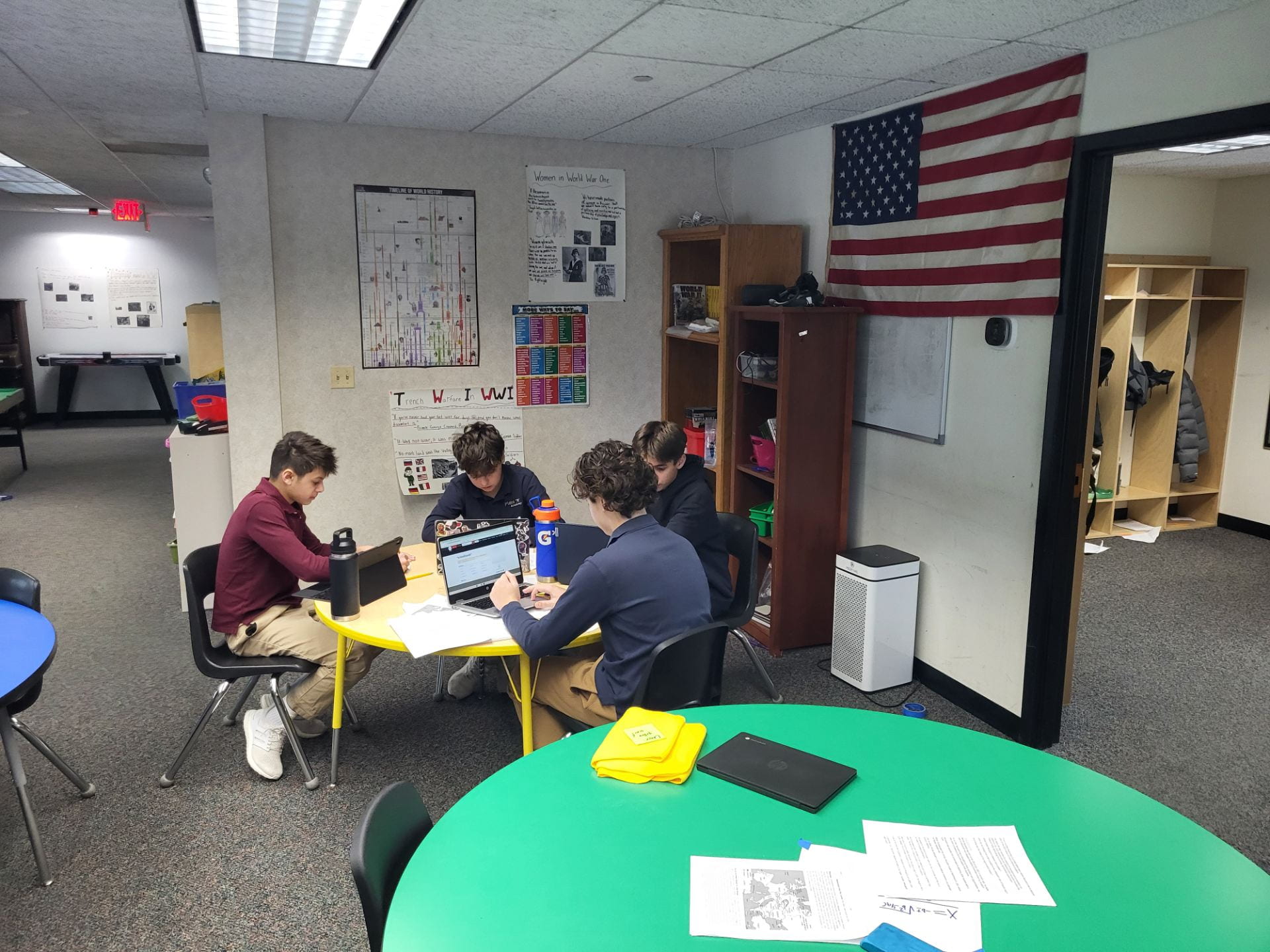
Tuesday we came back from our long weekend by starting off a brief study on some of the most important aspects of the beginning of World War Two: the rise of Benito Mussolini and fascist governments, and the appeasement of Hitler that allowed his aggression to continue to the point of starting a global conflict. The students first completed a reading of a biographical piece about Benito Mussolini and together as a class we examined the timeline of events and answered a series of questions about Mussolini, and his fascist party. We also took a deeper look at the strategies and tactics that the fascists used to seize power over the Italian state, and how this dramatic takeover further lead to the build up of tension in Europe before the outbreak of World War Two. We were also able to compare and contrast the rise of Mussolini with the rise of Hitler, nothing that many of their tactics were similar, as Hitler looked to Mussolini as an inspiration for his own ambitions. Upon completion of our readings and discussions, students were tasked with writing a brief summary reflecting on whether they believed Mussolini was an effective military leader, using evidence from the readings and discussions to provide evidence for their claims.

After we finished our study of Mussolini and his impact on the outbreak of WWII, we took a look at the process of appeasement, and how it led to the emboldening of Hitler’s fascist government, eventually leading to the invasion of Poland and the descent of Europe into yet another global conflict. Students were divided into four groups and tasked with role playing one of four major European powers from the 1930’s: Great Britain, France, Italy, or the USSR. Groups would be presented with one of Germany’s aggressive actions, (i.e. rearmament, occupying the Rhineland, annexing the Sudetenland.) and each group would have to respond in character as to whether they would choose to invade Germany over these offenses or not. If 3 groups could decide together to invade, then the war would begin and Germany would be stopped. However students saw that due to each of their own individual objectives and agendas, it was basically impossible to get the support necessary to realistically start and win a war against Hitler’s Germany. This activity allowed students to engage with history on a much deeper level, as by putting themselves in the shoes of world leaders of the 30’s, they could see how despite hindsight being 20-20, it was a very difficult decision to intervene and fight against Nazi Germany. We also got to build student’s critical thinking and rhetorical skills through the nature of the activity.

Wednesday we continued our study of appeasement by viewing the video: Appeasement: 10 Steps to WW2 by History hit on Youtube. This documentary goes through the process of appeasement, including reasons why the Nazis were doing what they were doing, how they justified their actions, and why the rest of the international community did not respond. As we viewed the video students took notes on each of the events and their significance, and we later got to a wrap-up discussion on appeasement in which the kids did a great job sharing their thoughts on the failures of the leaders of that era, and the justifications for their failures. Wednesday we also had yet another writer’s workshop with Ms. Debbie, who summarized her class as follows:

“It was an eventful Writers Workshop as we reached a core part of the course in which we discussed the Writing Process, a key method to developing writing skills. We looked at all the steps as a group, practiced the first step together, and then the students tried this step on their own in conjunction with the start of our first writing project, The Personal Narrative Essay. Each writer chose one of three brainstorming options to use to evaluate and decide on a topic. Thinking through their ideas and choosing the strongest one, the most inspiring one, is the first step in creating a Personal Narrative Essay. I am excited to review their brainstorming, and I can’t wait to read their drafts! “
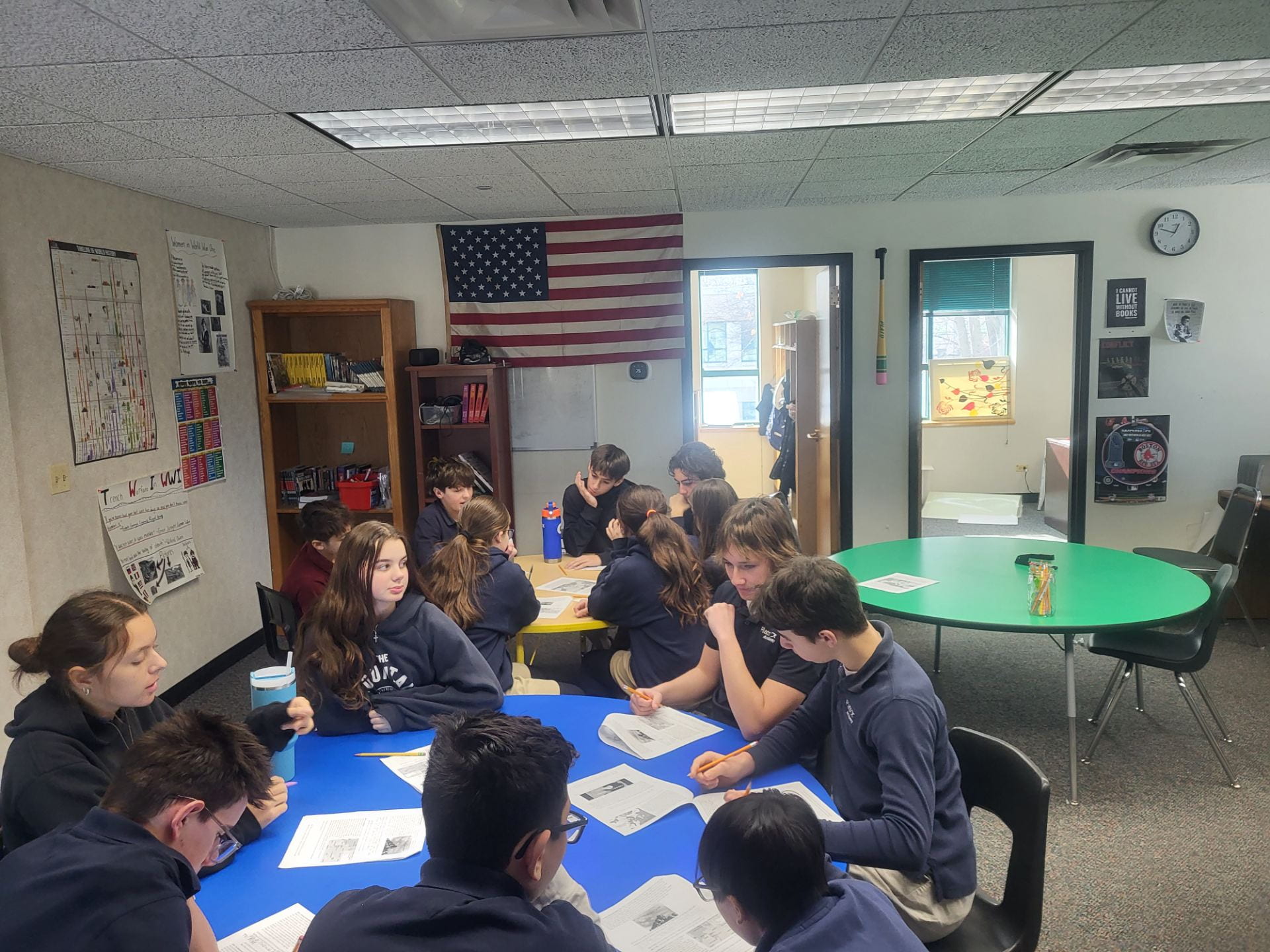
Thursday we finally began looking at the events of World War II by looking at the very beginning and the invasion of Poland by the Nazis. Students read an article published by facing History that detailed the psyche of the Nazis as they invaded, including primary source testimony from one of the bomber pilots of the Luftwaffe. Students also viewed a pair of videos that detailed the events and what the ultimate reason for the invasion was from the German perspective. Students got to see the warped world view of the Nazis, and learned about the concept of Aryanism, Lebensraum, and the agreement between the Nazis and the Soviets to simultaneously invade Poland while not engaging one another in combat. Students also filled out a World War Two vocabulary sheet with 21 definitions that will help us to contextualize historical events, groups, and concepts better. Students should be studying their vocabulary at home when they can, as there will be upcoming assessments for their vocab in the near future!
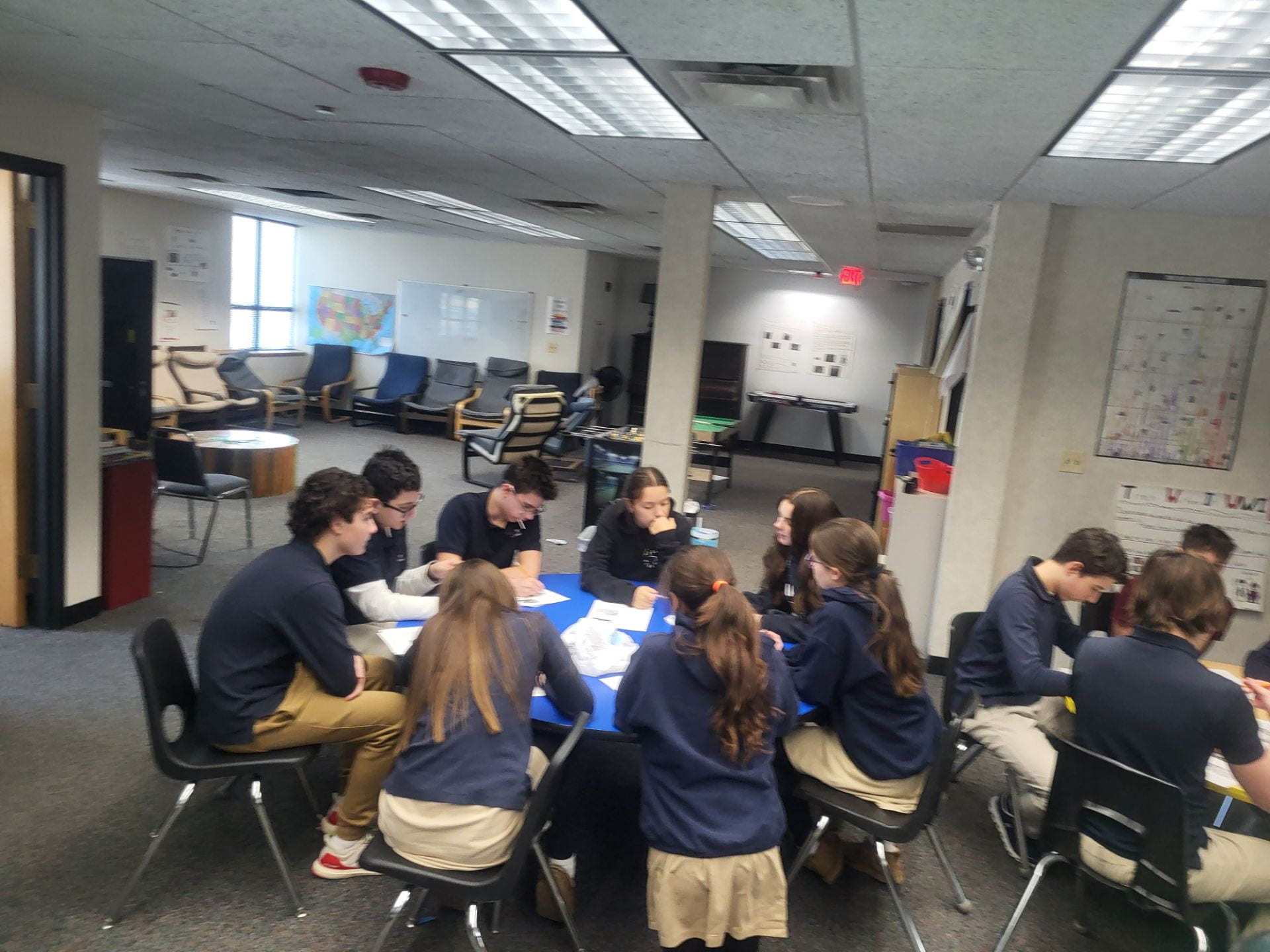
Friday we had a remote learning day, where students learned about the Maginot Line, a French fortification system designed to prevent a German invasion, and how that line eventually failed and led to the takeover of France by the Germans in 1940. Students viewed a video and did a reading with response questions to both activities. Monday we will briefly conclude our study of the events of the beginning of the war, before we move on to some even more exciting World War 2 topics, America’s involvement, and much more in the form of some really exciting primary and secondary sources! I hope everyone stays warm this weekend and I look forward to seeing everyone next week!

Week 19, January 16th

This week started off on another atypical note as me and Ms. Mary again switched places to prepare her class for the NAQT quiz bowl competition while she finished her exploration of “Flowers for Algernon” with my group. So courtesy of Ms. Mary here is what we did on Monday and Tuesday this week:

“Today, we continued reading Flowers for Algernon by Daniel Keyes. We are starting to reach the parts in the story that allowed us to return to some of our thematic statements and debate them with textual evidence rather than just our initial “gut instincts” and moral values – which is really exciting! We started by detabing the following thematic statement, “I would rather be smart, but lonely, than unintelligent and happy,” as we are seeing this become Charlie’s reality after the operation. What was interesting is the conclusion we reached: If we asked Charlie this question, he may prioritize his old self due to mental health; however, from our perspective and knowing how brutal the treatment of him was… we wouldn’t pick that for him due to our sympathetic nature. We also talked about how badly he desired this intelligence and how the answer to this question depends on what he values more – how intelligent people perceive him to be, or if he feels included in social dynamics (even if that inclusion is by being bullied without him understanding the mistreatment around him). This led to our debate of the next thematic statement, “Being mean to someone is okay if they aren’t aware of it.” Obviously, Charlie was initially unaware of the cruel treatment his “friends” treated him with. Now that he has gained the intellect to understand the treatment as mean, he is disgusted; however, before he understood it, he saw it as friendship and heavily valued those relationships. We talked about how it always caused him physical harm, but only caused him emotional harm once he gained the proper ability to understand what was happening to him. We also discussed the following quote, said to Charlie by former coworker Franny, about his inflated intelligence, “It was evil when Eve listened to the snake and ate from the tree of knowledge. It was evil when she saw that she was naked.If not for that none of us would ever have to grow old and sick, and die.” We were able to pick out that this was an allusion to the biblical story of Adam and Eve in the Garden of Eden, specifically the Fall of Man, where eating the forbidden fruit from the Tree of Knowledge brought sin (disobedience, shame/nakedness) and consequences (mortality, aging, sickness) to humanity. We discussed how this allusion was illustrating the unfairness of him getting the operation and gaining his intelligence unnaturally, and implied there would be natural consequences to his decision to gain his intelligence through science rather than traditional learning and studying. This prompted a discussion of the following thematic statement, “

It is fair to treat someone differently based on their intelligence.” He received this opportunity to increase his intelligence with an operation because of his intellectual disadvantage, meaning he was treated differently (as a science experiment) based on his intelligence being similar or equal to a mouse (Algernon) who they had previously provided the operation to as a control for their experiment. Initially, the whole class agreed it was unfair and almost inhumane; until I related intelligence to height. 

I asked for the tallest student to come up, and the shortest student to come up. I held an eraser up and asked each of them to reach the eraser without jumping. It was no surprise that the taller student reached the eraser (or high level in intelligence) easily, and the shorter student couldn’t reach it no matter how hard they stretched. In this scenario, our shorter student represented Charlie’s intellectual ability. We knew he worked extremely hard to gain intellect before the operation, but no matter how hard he worked… he just couldn’t reach many tangible results with that effort due to learning disadvantages. The next round, we gave our shorter student the ability to jump (like the boost Charlie got from the operation). It didn’t change the extra effort our shorter student needed to use to reach the eraser (or I.Q.), but it made it possible for them to do so. After much debate and discussion, the class remained split. Most felt it was fair for him to get this special treatment as it wasn’t due to lack of effort but lack of natural ability to achieve the same things as his peers. However, some felt it was still wrong, as it was unfair he gained the higher level of intelligence quicker than his peers due to the “boost,” as what took them years and years has been achieved in a couple of months. 

I look forward to continuing our reading and discussions! (:”

Tuesday: “Today, we finished Flowers for Algernon and began working on our final project. As we read today, we practiced our inference skills by using Algernon as a parallel character to Charlie. We pulled out textual evidence in Algernon’s behavior to support our predictions of what stage Charlie was in, and what stage was next for Charlie. Ultimately, we came to the conclusion that Charlie was dying, just like Algernon did… but in this process, we dissected some of Charlie’s core values: he’s very loyal to those he loves and cares about, he has integrity, he is kind hearted, he is a hard worker, and he cares greatly about how others perceive him and will do almost anything to maintain a positive image to those around him. 

After we read, we reviewed plot structure by labeling a blank plot diagram and summarizing the story within its plot regions. We talked about some main themes we learned from the story and reflected on how many answered our moral thematic statements we discussed and debated before reading. Students were then assigned their final project, a symbolic tombstone honoring and remembering Charlie Godorn. Students were asked to create a tombstone with 3 images that symbolize Charlie’s core values he worked so hard to be remembered by. They would include a thematic epitaph on the tombstone to tell us what Charlie’s story taught them as the overall theme of the story. After they create their tombstone, students will write a 2 paragraph eulogy explaining why they chose this theme by providing textual evidence from Charlie’s life, and will explain why and how their 3 chosen symbolic images represent Charlie as a person. I look forward to seeing their finished products as they continue working on them and completing them with Mr. Joe! (: “

Wednesday we returned to our regularly scheduled class time by continuing to work on our “Road to WWII” activity and allowing students to continue doing their research and working on their presentations so they could educate their classmates on the following topics as they relate to the beginning of the war: The Treaty of Versailles, The League of Nations, The New Deal, The Rise of Hitler, The rise of Mussolini, and the Aggression of Imperial Japan. We also had our second ever writing class with Ms. Debbie, who also wrote a great summary of her workshop for our blog:

“Greetings, parents!

I’m excited to be part of Mr. Joe’s class and work with your students in the Writers Workshop! Each week, we spend time discussing, analyzing, and practicing writing. We are almost through the basics on which we’ll build for the remaining classes, and the goals are to further develop writing skills and to prepare students to tackle any writing project that comes along.

This week, we took some time to get to know one another, and the students helped by sharing a mnemonic, a memory jogger, to remember their names. Then, the class received a letter as an example and template to work on an in-class writing warm-up project designed to familiarize them with the process of recognizing and practicing elements of writing. This was a mini version of the format that we’ll follow in the Workshop as we explore different types of writing.

We are starting our first project, a personal narrative, by reading a few examples written in a narrative style and identifying at least 4 elements of personal narratives. The students also received an assignment to write a Reflection at home. Writing a reflection not only relates to personal writing but will also be a tool to use during the writing process and as a type of formal, academic writing in the future.

It was a good week, even with the wild weather, and I am already looking forward to next week! Also, since writing a letter was on our agenda this week, it feels appropriate to follow the format here.

Sincerely,

Miss Debbie”

Thursday our students finally got the chance to present what they had been learning through their research last week and this week. Each group got a chance to share what they had learned and demonstrate their understanding by educating their classmates. They made a great set of presentations, and it was awesome to see how everyone’s research and public speaking skills have grown since the first semester. While groups presented, the rest of the class filled out some guided notes sheets to help them organize their thoughts and help reiterate what they have learned by engaging with the content multiple times through the act of writing.

Friday we finished up the rest of our presentations from the road to WWII mini project, and then the students learned how their diligent note-taking can pay off by being challenged with a pop quiz on the road to WWII. In this short quiz students were challenged to use their notes to answers few questions about the weeks’ information in short responses. After this activity our students began a reading on the origins of the nazi party in Germany and the history of the Nazis from their beginnings in the 1920’s until their downfall in WWII.

Throughout last week and this week we also had a few students who participated in a collaboration with Ms. Demetra’s class by helping her students learn a bit about how to use the internet to do research, how to judge reliable from unreliable sources, and how to extract the most important information from online reading materials. So I must shout out Charlie, Julia, Petro, and Sokrates! Thank you so much for being such great examples of our classroom Everyone, you should be very proud!

Science With Ms. Pam:

This week in science students continued their exploration of plant biology by studying seeds and root plants. On Tuesday students participated in labs that explained the process of seed germination, and began a long term lab where each student will put a seed they received into a wet paper towel and then place the seed in a location of their choosing. Each day students will measure their seeds to see how much they have grown or not grown. The lab will continue through next Tuesday. Thursday students did a lab about root plants where they got to see some examples of the different ways roots evolved, and then took various notes on their observations of the different qualities of the various root plants.

Week 18, January 9th

It is the start of a new calendar year and a new term for us in room 214, and it has been so great to see everyone refreshed and back in our room for our first week of 2026! This week we did a great job of easing back into things and also got introduced to our new writing teacher: Ms. Debbie. With her help, students will get an even better opportunity to develop their writing skills to help them prepare for high school and create even more exciting projects here in room 214 for the second half of our year! I couldn’t wait to jump right back into action as we transition into our WW2 unit by exploring the years leading up to the work to help our students contextualize the largest conflict in human history.

Tuesday we eased back into the classroom by first doing some writing in our journals and having a class discussion about winter break. By sharing these stories we were able to shake off some of the rust of the past few weeks and build our classroom community by learning more about what makes the holiday season so special for all of us. After this we started to get some more context into the beginning of WW2 by doing a map coloring activity where students colored and labeled their own maps of 1939 Europe, including which nations were with the Axis, which fought with the Allies, which were neutral, as well as the locations of various important battles and some of the concentration camps established by Nazi Germany. Once we started to get back in the groove of being in the classroom, we started our contextualization of World War Two by viewing a video about the “roaring 20’s” as a part of a 2 day exploration of the 1920s. Students learned about the celebratory mood of the 20s with everyone being so appreciative that World War One had ended, and all of the cultural changes that came along with it including the popularization of recreational spaces. We also discussed the various social changes like the advancement of Women’s rights due to the passing of the 19th amendment, and the emergence of the Harlem Renaissance due to the “great migration” of African Americans from the south to the north due to the immense hardship caused by the white supremacy and lost cause movement of the deep south. Students got to see the new technologies introduced in the 20’s such as the radio, toaster, refrigerator, gas oven, automobile, and development of movies with sound, which also lead to the establishment of celebrity culture and the expansion of the size of the city of Los Angeles. Students also got to learn about the incredible economic growth of the 1920s, and the downside of that growth due to laissez-faire policy, leading to the economic crash of 1929.

Wednesday we continued our exploration of the 1920s by finishing up our video activity and having a class discussion about the 1920s as a decade, all of the changes that the decade brought, and how this time compared and contrasted to the previous decade in which WWI was fought. Wednesday also brought a major change to the classroom by having our first writing class with Ms. Debbie! Ms. Debbie introduced herself to the students while they introduced themselves to her by doing an interview activity that included thinking about what types of writing is used outside of a school setting, what their favorite and least favorite writing activities have been in the past, and what their best qualities were. They also got to practice some creative writing by making some posters that explained some of the different types of writing such as graffiti, email, or text messaging!

Thursday was a special day, as we had a guest teacher: Ms. Mary! Since her class has an upcoming quiz bowl competition next Wednesday, we traded places for the day while I helped get her class prepared for quiz bowl, and she did a literature exercise with my class! But don’t take my word for it, here is Ms. Mary’s thoughts:

“Today, we began a mini-exploration unit using the short story, Flowers of Algernon by Daniel Keyes. We started our exploration with some moral thematic statements that allowed students to get their brain focused for the literature we were about to read. 

I would display the statement on the screen, and students would walk to one side of the room if they agreed with it, and the other if they disagreed. We then had a brief discussion where students were given an opportunity to share their thinking behind their decision. Here are the statements we discussed: 

1. There is only one type of intelligence. 

2. Mice are smart animals. 

3. Animal testing is okay, as long as the animal doesn’t die.

4. I would rather be smart, but lonely, than unintelligent and happy. 

5. Being mean to someone is okay if they aren’t aware of it. 

6. It is fair to treat someone differently based on their intelligence. 

7. I would rather be the most popular person than the smartest person in school.

8. Some tests are impossible to fail.

What was really interesting about this is some later statements caused students to rethink their answers to previous questions. For example, when statement 4 was presented, students unanimously agreed they would rather be unintelligent and happy as mental health is important. However, when presented with statement 7, most would rather be the smartest person rather than the most popular. We compared and contrasted our thinking between the two statements, despite their similarity. What this did was wake our brains up to thinking deeply about seemingly simple questions or phrases, as these simple statements were a lot more complex than they seemed. It was important for us to enter this mode of deeper thinking before reading our story because our main character, Charlie, would begin our story by giving us simple details. We would miss out on half the story if we didn’t read with the intent of making inferences and digging deeper into the contextual meaning of his progress reports. 

As we began reading, it was amazing to look around the room and see “lightbulb moments” spark in their eyes, realizing how the thematic statements related to the story. We had lots of great discussions where we made inferences about how the story would progress, talked about the hidden context of what Charlie was telling us, and analyzed the experiment from a scientific point of view to better understand the reason behind the steps the scientists took. I look forward to continuing our reading and discussions on Monday! 

Thanks for allowing me to do this mini-unit with your kids… it makes my ELA heart very happy. (:”

Friday we began looking at the 1930s by specifically studying the great Depression through Viewing a series of interviews with historians from CSPAN, and analyzing some photos from the famous efforts by the government to photograph the effects of the depression, led most notably by Dorothea Lange. We also got to learn while playing after we explored one of the 1930’s most influential contributions to our current culture: the board game “Monopoly”. First students learned about the mysterious and complicated history of the game, including it’s invention by a young progressive Elizabeth Magie, and its eventual sale and distribution by the Parker brothers game company. After this the students got a chance to play the game, and hopefully reflect on how the game represents many of the problems and struggles that people and businesses faced during the 1920’s and 1930’s.

Next week we will continue our contextualization of the war by looking at the 1930’s in Europe, and the rise of fascism through notorious fascist leaders Mussolini and Hitler. We will learn what circumstances lead to them taking power, and how their approach to governance directly led to WW2. Until then I hope everyone has a great weekend, and I look forward to getting fully back into the swing of things with our first full school week of 2026!

Week 17, December 19th

The holiday season is here, and we got the season underway in style in room 214 this week. It was abbreviated week, but we still took the opportunity to practice for our holiday show, do a little creative writing, and work on building some academic knowledge while also taking a moment to celebrate the people in our lives and our classroom community.

Monday, Tuesday and Wednesday we used the vast majority of our time to practice for our holiday show performances of ‘Last Christmas’ and ‘Candy Cane Lane’. Perfecting our group singing and choreography moves. I was proud to see everything coming together so well, everyone worked so hard together and it paid off amazingly! Tuesday was a particularly exciting day as we got do our “dress rehearsal” where students got to practice both their songs as well as their emcee introductions in the actual venue they would be performing in later in the week!

When we weren’t practicing for the show, we spent some time doing a bit of creative writing as students made their own “pun snowmen”, based on their favorite celebrities, characters and athletes. After they created their snowmen they wrote their backstories and practiced their creative and narrative writing. We also took some time during the week to do some trivia, with both Christmas themed questions as well as NAQT quiz bowl questions.

Thursday was the big day we have been preparing for all month, and our preparation clearly paid off! We had an amazing show with great performances from my class as well as all of the younger groups, and my class also did an incredible job introducing the acts and hosting the show! I couldn’t be more proud of everyone’s efforts, and days like Thursday showcase what a great community we have here at Plato as well as a great educational institution! We also did our Christmas bake sale the day of the show, and raised almost $600 for our class trip, so thank you to all of our parents and relatives who helped us raise money, and thank you to our students for helping run the sale!

I hope everyone has an amazing Winter break and gets the opportunity to rest, relax, and spend time with family before we start our next term up in January! So to all of my readers, Happy Holidays! Merry Christmas! Happy New Year! And we’ll see everyone in January 2026!

Week 16, December 12th

It is the conclusion of another exciting week in room 214, and as we draw closer to our winter break, we are working on enriching our classroom community and preparing to put on a great holiday show for our school community in the coming days! We’re inching closer and closer to showtime, and the excitement is building as we prepare for a great show for all of our Plato parents and families!

Monday we started off our week by easing back into things and working on our Geometrocity projects, most of the groups have moved on to the fourth phase of their projects, where they are finally incorporating 3D geometry concepts and making 3D models of a district from their city. Those who completed this did a bit of self reflection and reflection on their partners by moving on to phase 5 which is the assessment, where students Grade themselves and their partners based on their contributions to the project and their work ethic throughout. After this we started to further prepare for our holiday show performances, by beginning to work on our choreography, and starting to make some stage props after having a collaborative group discussion on what we want those to look like.

Tuesday we continued to prepare for the Holiday concert by rehearsing our songs and choreography and starting to put the entire performance together – combining both singing and dancing for the first time in the preparation process. In our spare time, we did a bit of journaling and played some geometry trivia. Throughout the week when we had a few minutes to spare, students would play seterra map quiz on their devices to familiarize themselves with European geography in preparation for our upcoming World War 2 unit, as it will obviously be much easier to study the events of the war if we can all understand where the events are happening.

Wednesday we started off the day by having another special collaborative practice session with Ms. Mary’s class, where we started to get a better idea of how to perform the 2nd floor multi-classroom song “Candy Cane Lane” that our classes will be performing alongside Ms. Beth and Ms. Anna’s classes. Using Ms. Mary’s expertise we did some practice exercises that helped students understand what pitch and volume they needed to use while singing, and we managed to get both of our classrooms on the same page. After finishing the large group practice, we broke off and did some more practice of our song with just our classroom.

Thursday we started off the day with another large group rehearsal, this time with all of the 2nd floor classrooms! We all met downstairs in the foyer to practice both our large group song in English, as well as in Greek. It was so fun getting to see everything coming together and getting to hear all of the classes perform together for the first time! After we finished the large group practice, we went back to our classroom and kept practicing for our individual class song, and started to make some of our candy cane props for the “Candy Cane Lane” performance. We also received scripts for the emcee portion of the show that we will be doing, and students started to rehearse the introductions for all of our schools’ acts.

Friday we finished up making our props for the stage, which was a great opportunity for our class community to spend some time together doing something a bit more relaxing before we have to start another hectic week of practicing next Monday. After we finished making props, we did some more practicing, and later in the afternoon we all worked together as a class and did a much needed deep cleaning of the classroom and the breakout rooms. We now have a great uncluttered space, which will hopefully lead to an unclutter-ing of our minds before we start to get back into the swing of a higher level of academic rigor after we return from winter break. After the cleaning, we did a bit more rehearsal and got all of our stage assignments for our performances next week!

Math With Mr. Zafeiris: This week we began to study parabolic slope formula and learned how to solve equations to find parabolic slope as compared to linear slope. For Geometry we had a class discussion about theorems and started with the Pythagorean theorem to introduce trigonometry and trigonometric concepts.

Science With Ms. Pam: This week in science students learned about single celled organisms, taking notes and creating presentations about different types of single-celled organisms and how they move, how they obtain energy, how they reproduce and how they survive. Students also completed a bonus activity related to natural selection.,

I hope everyone has a great weekend, and I can’t wait to see everyone Monday to begin our final preparations for our Holiday Show! It’ll be a great way to kick off break and celebrate the holidays with our Plato community!

Week 15, December 5th

We had a very busy first week back after taking a bit of time off to be with friends and family for the thanksgiving holiday. I hope everyone had an enjoyable and restful break, and was able to enjoy their time off to rest and recover! We have a lot to prepare for, and not very much time to prepare, so every moment felt very valuable this week as we prepare for HSPT testing this weekend for many of our students, as well as the Christmas show for all of our students!

On Monday we started practicing singing the two songs that were selected for the Christmas show, “Last Christmas” by Wham! is our class’ song, and we also practiced for the 2nd floor multiple classroom group song. We had a good start to our practice, and the students showed a great attitude as they learned the lyrics and music for our song choice which is a bit challenging! After we concluded our song practice and got a strong feel for our music, we moved on to doing some work on the Geometrocity projects, and most students finished up the 2D portion of phase 2 to move on to the 3D model portion in phase 3. Everyone’s cities are looking great and coming together nicely!

Tuesday we continued to practice our songs as a class, and also continued doing some test preparation that the students worked on for Monday’s math class. We also started to incorporate some ELA test preparation for the verbal, reading comprehension, and language skills portions of the HSPT test. This was highly valuable even for the students who are not testing this week, as standardized formal testing is a reality for all students as they move through high school and will most likely take the PSAT, PACT, ACT, or SAT to move on to the college admissions process. Engaging with these types of test prep materials will build confidence while also allowing students to develop their testing skills and strategies to help them put in the best performance they can when test day finally arrives!

On Wednesday we welcomed Ms. Mary and her class into the classroom as we prepared for the large-group song for the 2nd floor at the Christmas show! Ms. Mary’s experience in choir singing was a tremendous asset as we learned a lot about how to approach group singing, how to get everyone on the same page in terms of tempo and melody, and volume. This was a great chance to work on our preparation for the show while building our community in the Jr. High classrooms of Plato Academy! After we finished up with our neighbors, we went on to do some more test preparation to get ready for the HSPT ELA verbal portion.

Thursday was a special yearly tradition for Plato Academy: the holiday shop. The students got a chance to get some thoughtful gifts for everyone on their wish lists while working with a predetermined budget, and they had a great time shopping and putting a lot of thought into all of their choices. After they picked out what they wanted that fit their budgets, they got a small taste of what their parent’s go through while wrapping all the gifts they bought by wrapping and tagging all of their purchases. It was a lovely chance to keep building our school community and students also got the chance to learn a thing or two about budgeting, gift giving, and gift wrapping that they can take with them for the rest of their lives. The holiday shop took up most of our class time, but we were still able to do some review of that prep materials and get some Christmas show song practice in with what little time we had left.

Friday was the last chance for many of our students to practice for the HSPT, so we dedicated most of our time to prepping for the two areas we did not spend as much time on while prepping earlier in the week: reading comprehension and language skills. Students took a practice test under real testing conditions including time limits and limits on things like talking or utilizing any notes or assistive technology. We went over some test-taking strategies and mindsets to use to help maximize their test scores and help them if they feel stuck while taking a standardized test.

Next week we will continue to prepare for the Christmas show performance and work on some of our long-term projects! I hope everyone has a great weekend and I look forward to seeing everyone on Monday.

Science with Ms. Pam: This week in science students worked on finishing make-up work and their genetics review games. On Thursday students learned about adaptations that animal species make for survival and did an activity where they identified and described aspects of natural selection and different adaptations that specialized animals make to help them survive in extreme environments.

Math with Mr. Zafeiris: This week we practiced quantitative and math skills and continued our preparation for the High School Placement Test. Starting next week, we will return to factoring and begin working on quadratic equations. The students show a strong interest in mathematics, and their progress is outstanding.

Week 14, November 21st

This was a great week to take an opportunity to reflect on our progress as well as setting some new goals and ambitions for the future! I would also like to thank all of our Room 214 parents for coming to conferences this week. It was so great to get to see so many of you and discuss all of the incredible work your students have put in to make our classroom such an amazing environment for learning and growth!

Monday we took an opportunity to learn some history behind the upcoming Thanksgiving holiday. Students played a game where they assumed the role of a puritan who was being persecuted for religious reasons in early 17th century England. In the game their characters made the decision to flee persecution and set out for a new life in the new world. Students got a chance to see all of the various hardships these “pilgrims” as they came to be known would face before, during, and after their journey across the sea to start a new life where they could be free to practice the religion of their choosing. After students played this game and learned the fate of their character, they participated in a short reflection activity about the journey of the pilgrims and the establishment of the Plymouth colony, including the heroic generosity of the Wampanoag tribe that gave the pilgrims the resources and skills they needed to have the means to survive in this new world. To end our lesson students did a creative writing piece where they either wrote a first-person story from the perspective of a surviving pilgrim; or for those unfortunate souls who did not survive they wrote a story from the third-person perspective about their journey and their untimely demise. It was a great and engaging opportunity to learn why we celebrate this upcoming holiday, as well as flexing some of our creative writing muscles!

Tuesday and Wednesday were spent preparing for the conferences that were coming up later in the week. As you know at Plato Academy our upperclassmen do student-led conferences, so to be able to make these conferences the best and most productive that they can be our students need to spend plenty of time preparing. This included looking back through their trimester 1 portfolios, and choosing some of their favorite examples of growth, including pieces they were proud of and pieces that challenged them (which were sometimes one and the same) for writing, math, social studies, and science. As students selected their pieces it was so cool to see how they reflected on their own growth, sometimes it was hard for them to believe that some of the work was only from a couple of months ago, as their has been so much growth and development in such a short period of time. Once the students picked out what work they wanted to showcase, they filled out their conference scripts and started to practice their conferences with one another, and with me as well! We made sure everyone was prepared and felt comfortable heading into our conferences Thursday and Friday, and from what I would later see on Thursday and Friday it clearly paid off!

Thursday students got some last-second practice runs in before their conferences later in the day, and did some more work on one of their long-term projects. The project they worked on was the conclusion of our first trimester of “Music Mondays” where they reflected on their learning by making image collages based on our three units: “The Day the Music Died” or the early days of Rock and Roll, Bob Dylan and “modern day Dylan”, and Motown. In addition to these collages students will be writing reflection pieces on the units in groups, where each student will choose a unit to focus on and write about what they learned including the type of music, how it changed over time, how it impacted American culture, and how it reflected the history of our country and what our nation was going through when that music was written, recorded, and released.

On Friday the students pivoted to a different long-term project: geometrocity. Most of the students were able to finish phase 2 of the project, and many began to move on to phase 3 where they will begin to make 3D versions of their model cities out of paper. This will further reinforce their geometry skills and knowledge by having them create shape nets and seeing how 2D shapes are used to create 3D structures. After we finished working on geometrocity for a while the class had some fun relaxing while still learning and reviewing our knowledge by playing trivia. This included both Thanksgiving themed trivia, as well as NAQT quiz bowl competitive trivia questions. It was nice to have some fun and unwind a bit before heading off for a well deserved break.

I would again like to thank all of our parents for coming to conferences, and thank you for everything you do and for all of the support you give your students all throughout the year. It was clear to see the love and commitment you all have for your kids, and I cant overstate how far that can go in the classroom, so truly thank you for all of the help on behalf of myself as well as your Plato students! It was great to reflect as well as setting some new goals for all of us moving forward in the school year! One last reminder is that report cards will be sent out next week, so be on the lookout for those! I hope everyone has a great Thanksgiving, and I look forward to seeing all of my students again in December as we will begin to prepare for our Christmas show!

Week 13, November 14th

It is the conclusion of week 13 for our class, and along with it we finished up our mini-civics unit by looking at activism, sacrifice, and the different approaches people can take to help create meaningful change in their world. We had a great week that included some quality community building with some of our younger Plato students, and as we move toward the end of our first trimester of the school year we took some time to learn some last-second skills and content before we start to reflect on everything we’ve done so far this year and start planning some goals for the future!

Monday we had another fantastic Music Monday discussion where we continued to explore Motown and how the content of Motown music reflected the changing nature of the civil rights movement. We also got to introduce a new wrinkle to the topic: the intertwined nature between what is considered “white music” and “black music”, and how these types of music started to make social commentary at different times based on their “acceptability” by the American public as a whole. After we finished up our music discussion, our class finished writing letters to our congressional representatives. As we wrote we had a class discussion on how exactly Congress operates, which politicians are more or less likely to read or respond to a letter, and how these letters can be one of many ways to create change in our communities. I plan on printing and sending these letters to their addressed representatives, so maybe we’ll see who takes the time to respond. Monday we also took a trip to Ms. Demetra’s class to see a very well-done informative performance about Knights! It was great to share this time with our school community, and was so fun seeing the pride on the faces of Ms. Demetra’s students!

Tuesday was veteran’s day, so as a major focus of our coursework this year is America’s conflicts and the history surrounding them I figured it would be remiss not to do a special veteran’s day lesson. In our lesson we had a class discussion about the meaning of veteran’s day, and focused on the challenges that veterans face after they return home from the war. Our lesson was supplemented by a series of short videos that gave the students some insight into both ideas, in particular we looked at the story of a US Marine veteran who served in the Iraq war and his efforts to try to get assistance and treatment from the VA for his PTSD. While he was waiting he worked with one of his best friends who was a fellow USMC veteran and they both bonded over their struggles, unfortunately his friend would succumb to his illness and took his own life, while the main subject of the video ended up waiting over 450 days just to get any response from the VA. We talked a bit about the reasons why this happens, including the higher number of surviving veterans and the growing number of women serving, which makes taking care of our veterans a bigger challenge as there are so many who need help and only so many resources to help them with. This transitioned nicely into a discussion on our upcoming service projects for the year: we will be donating to the wounded warrior project and making care packages for the VA. Keep an eye out for further communications on how our class can help out with such an important cause!

Wednesday we took a break from civics and promoting change to return to Geometrocity. Most of our students continued to work on drafting their own cities, incorporating geometry concepts into each part of the city and learning a bit about city planning in the process. Some of our groups have begun to transition to the next portion of the project, where they started to lay out their city and attach the various “neighborhoods” together with the appropriate road connections ensuring people can move from one area to the next. As students did this they were asked to think about why they chose the layouts that they did, allowing them to do some reflection on their choices, and even thinking about the layouts of their own communities in the process. Next week we will hopefully be able to conclude Geometrocity, by making 3D models of their cities, and even some tourism promotional material!

Thursday we began a review of some very important content: the struggle for civil rights in the United States. This ties into our civics mini unit by showing students what some of their civil rights and liberties are, what they can do to enact change in their community, and some different approaches to promoting change from our nation’s past. We also of course gained more historical context into the various leaders of the civil rights movement and the struggles they underwent in their quest for justice. Students read about 3 different civil rights leaders: Martin Luther King Jr. (who everyone already knew), Malcom X (who some knew), and Stokely Carmichael (who none knew, and who far too many adults are unaware of). Students read primary source materials about these three leaders, and saw some of the different approaches they took to gaining civil rights, as well as learning a bit about the misconceptions about their approaches. They learned that MLK wasn’t all about passivity and “turning the other cheek”, they learned that Malcom X wasn’t some violent belligerent individual but rather an advocate for peace and unity, and they learned about Stokely Carmichael’s emphasis on economic growth, lifting one’s own community, and being proud of one’s heritage. In the end we compared and contrasted the three’s different approaches, and tried to reflect on how we could incorporate these types of approaches when trying to make changes in our own world, country, or community.

Friday we continued and concluded our mini-civics unit by moving backwards and looking at the challenges African Americans were facing that lead to the civil rights movement. As a class we read about Jim Crow laws and their origin, and all the different ways they were implemented to control and discriminate in both the southern states as well as northern ones. We then looked at primary source examples of various Jim Crow policies and identified how each were used by white supremacist governments to exert control and limit the civil rights of African Americans. We even took a look at one of the infamous “literacy tests” that black voters were required to take; our example was 68 questions long and required the reader to have a seemingly encyclopedic knowledge of the federal government and it’s functions. I believe this was an excellent illustration that gave the students great perspective on how I just and wrong these policies were. To conclude our activity we read about two of the earliest civil rights leaders: Booker T Washington, and W.E.B. DuBois. We learned about their approaches to trying to create change and promote justice, and then related their approaches to those of the civil rights leaders who would come after them, comparing and contrasting “passive” vs “active” means of resistance against an unjust system that worked against them.

Next week we will begin to prepare for our conferences by looking at our class materials and reflecting on everything we’ve learned so far as well as thinking about our struggles and areas where we need improvement. I look forward to seeing all of our class’ parents next week and discussing achievements and future goals as well! We will also be hopefully finishing Geometrocity, and (time permitting) will look at the real history of Thanksgiving and the earliest colonization of North America by the English. I hope everyone has a safe fun weekend, and I look forward to seeing both my students and their parents next week!

Math with Mr. Zafeiris:

This week we focused on two goals:

1) Simplifying radicals

Skills we practiced:

  • Recognizing perfect squares
  • Using the product/quotient rules:
  • Pulling factors out of a square root:
  • Simplifying radicals with variables:

2) Solving radical equations

General strategy:

  1. Isolate the radical.
  2. Raise both sides to the appropriate power (square for square roots, cube for cube roots, etc.).
  3. Solve the resulting equation.
  4. Check all solutions in the original equation to avoid extraneous solutions (these often appear after squaring).

Practice at home (Khan Academy):

  • Simplifying square roots / Rational exponents & radicals
  • Solve radical equationsEven 15–20 minutes of targeted practice helps a lot.

Tips for students:

  • Always factor inside the radical to find perfect-square factors.
  • When solving equations, write “Check:” and plug the solution back into the original equation.

Thank you for your support!

Week 12, November 7th

Yet another week is in the books, and if there were a word of the week for us in room 214, it would be “civic”. This week we started a mini-unit on civic engagement, which involves the development of critical thinking, research, writing and rhetorical skills! One of our goals here at Plato Academy is to turn our students into active members of their community, and since my students are here in room 214 on their last stop before moving on to high school and learning even more about their role in our democracy, I find it essential that they have a strong base of knowledge of how our government works and what their role is within our society, and we’re off to a great start in building that understanding!

On Monday we started off by continuing our exploration of Motown music for our “Music Mondays”. Students continued to listen to a variety of songs from “early Motown” and “late Motown”, comparing and contrasting them in the process. One element the students were made aware of this week is that our “late Motown” era (1968-1973) started the year that Martin Luther King Jr. was assassinated, which gave them some historical context and should make for some more interesting perspective and contributions to our class discussions as we continue to examine civil rights through a musical lens. Students began to present their findings this week and have some class discussions about their observations from researching the music of their choice, and I’m excited to see what perspectives students will have to share next week! After Music Monday concluded, our class started out a mini unit on civics by taking a look at a documentary titled: Gabby Gifford: Won’t Back Down. The film highlights the life and struggles of former congresswoman Gabby Gifford, who survived an assassination attempt during a mass shooting event, and how her and her husband, astronaut Mark Kelly rose up out of adversity and became advocates against gun violence and for survivors and families of those affected by gun violence.

Tuesday we finished our viewing of Won’t Back Down, and then went on to have a series of class discussions about some of the topics explored in the film. This included gun violence, mass shootings, mental health, and school shootings. We had a great discussion and gauged many of our students feelings about school security, as well as feelings about gun control, gun control laws, and the state of mental health and mental healthcare in our country. I would like to commend my students for having such civil and reasonable debate considering the controversial and emotionally stirring nature of the topics of discussion!

Wednesday we took a step away from politics, but still kept to the theme of “civic” by getting back into our Geometrocity project, and doing a bit of a different kind of civics: civic design. For Wednesday’s activity students were tasked with designing their “geometry cities”, by using grid paper and checklists containing both civic and geometric concepts to have the students design cities of their own in 2D! Students have 10 different districts to design, and in the process they are learning a bit about city planning in general as they see things like what types of buildings go in the “city services” sector or “city hall” area compared to the “tourist area” or “downtown living” areas. Students started out with road layouts, and then would add buildings using geometric concepts like “circle in a square”, “pentagon”, “4 rectangles” etc. to make sure they included each type of geometry term. It was great to see how much fun everyone was having being creative, and hopefully this will lead to students seeing geometry in their everyday lives, as we all know that math surrounds us even if it isn’t always obvious. There is still a lot of work to do for phase 2 of the project, but once we all advance to phase 3 students will get to really bring their cities to life by combining all of their district grids and making 3D models of their geometrocities!

Thursday we resumed our exploration of civics, this time taking a look at the recent elections that happened earlier this week. As a social studies educator I always like to include content that involves current events, and to help prepare our students for living in a democracy it is essential that they understand and engage with elections at some level. For our activity I had students break into four groups, each studied and analyzed one of four elections: The Virgina Governor’s race, the New Jersey Governor’s, California proposition 50, and the race for Mayor of New York City. After the students did their research, they presented their findings to their classmates, and so we all got to learn more about the important candidates and issues that surrounded these elections that have dominated the news cycle. After sharing, we had another great class discussion about the various trends we saw from the elections’ platforms: particularly those of the winners! And students got to see a bit of a “state off the Union” by looking at which ideas were important in all of the election, such as affordability, crime, and immigration. They also got to learn a bit about gerrymandering and redistricting as they learned about California proposition 50 and what other events led up to prop 50 being proposed and eventually passed.

Friday we started the final part of our civic engagement mini-unit: writing letters to congressional representatives. We watched a short introductory video that explained how bills become laws, so that students had a better understanding of who it was they were writing letters to, and how those people worked to help our government run. After the video, students did a bit of research to find out who their house representatives were in the US House of Representatives, and started to do some research into proposed bills that students could urge their representatives to either support or oppose. Student’s chose a political issue of their choice on Thursday afternoon to write about, and it was really fun to hear everyone’s conversations as we looked up on congress.gov to see what bills had been recently introduced and how they related to their issues of choice. These issues include homelessness/housing, school safety/school shootings, gun control, climate change, abortion, and taxes! It’s always a fun moment for me as a civics teacher when students realize just how many bills are introduced into Congress (over 10,000 currently), and how unlikely it is for any given bill to actually become a law. Next week we will continue this activity as students learn (or review) how to write a formal letter, how to address a congressperson in a way that will get them to take them seriously, and how to structure an argument in as efficient a way as possible as we all know that most congressional letters are less than a page long! Friday we also went to Skokie for a field trip to see a presentation of “Give ’em Hell Harry” a one man show documenting the life and presidency of Harry Truman, performed by none other than a grandson of Truman himself! Students represented our school very well, and learned a bit about 20th century history in preparation for our eventual WWII unit which will start after we return from winter break!

As always there is so much to learn and so little time; we had a great week here in room 214 and I look forward to yet another jam packed week starting Monday! We will likely be taking a look at some more US history next week, as well as continuing our Geometrocity projects. We will also be starting a bit of reflection as we prepare for our upcoming conferences! It’s important to take moments to reflect and look back at our work, so we know how to best sharpen our skills for the future, and this will be a great opportunity for all of us to look back at our first trimester to see what we did well, what needs a bit of work, and how we can continue to improve to become our best selves!

Math With Mr. Zafeiris: This week in math we introduced and discussed radicals and how to simplify them. On Wednesday we played a team game: each team was given a problem, and their goal was to “defend” or “attack” the other teams’ castles by solving the problem correctly and showing their work. This helped students practice simplifying radicals in a fun and engaging way.

Science with Ms. Pam: This week students did a lab where they were able to extract pure DNA from strawberries by mashing them up and treating them with Isopropyl alcohol. Later in the week we began to learn a bit about the roles and processes of proteins as we examined protein synthesis by taking notes on some videos and online readings.

Week 11, October 31st

It is the conclusion of yet another great week here in room 214, and we ended the week in style with a fantastic Halloween celebration! As a first year teacher I just want to say how much fun it is to be with such a great community, and how much fun it was to see everyone’s amazing creative costumes in all the classes of Plato Academy! On top of that I would like to thank our parents for providing such an amazing lunch for the entire school! Your hard work and contributions do not go unnoticed, so thank you so much for helping create such an amazing atmosphere to celebrate one of our favorite holidays!

This week for Music Monday, we had another fantastic with Ms. Mary’s class an introduced a new topic to the students: Motown. First we introduced and added some context by talking a bit about the origins of Motown and how the record company became a genre in itself and would evolve and change both music and American culture as a whole! Then we had the students listen to a variety of Motown artists, comparing and contrasting early Motown songs to later Motown songs to see how African American artists had to first ingratiate themselves to the mainstream American audience before evolving and creating more mature and complex music that provided commentary about American society and it’s treatment of African Americans in the middle 20th century. Later in the day we started out a mini unit on horror literature that we worked on this week by reading Edgar Allen Poe’s “The Tell-Tale Heart” as a class. We then began a multi-day writing assignment that assessed and strengthened the student’s ability to use perspective, tension, suspense, and atmosphere by re-writing the story focusing on either the narrator’s neighbors, the police, death, or the old man who gets killed in the story in a 3rd person perspective.

On Tuesday we picked up where we left off by continuing our exploration of Poe and “The Tell-Tale Heart”. But first we did another collaboration with some younger students, by visiting with Ms. Soraya and Ms. Efi’s class to do an activity with some of our little buddies on the first floor! The activity involved having the younger students partner up with someone from my class, after they had sat with their partners the younger kids would describe a monster and the older ones would draw the monster to help bring them to life! Once they finished drawing them, they worked together to give the monsters backstories to show off some of their scary adventures. It was a great opportunity to grow our community and set a great example for some of our younger students while also relaxing and making some fun art while practicing creative writing. After we returned to our own classroom we finished re-writing “the Tell-Tale Heart” in a 3rd person perspective, and students grouped up to re-write the story in a first person perspective using the same characters they had focused on earlier as the new narrators for their story. In the end we of course shared our stories in our best spooky Edgar Allen Poe voices to build more anticipation for Friday’s holiday!

Wednesday we moved on to a lesser-known Edgar Allen Poe story: “The Black Cat”. Students read the stories individually and answered some questions to (again) both strengthen and assess their understandings of atmosphere, tone, characterization, and plot elements. The students did a fantastic job dissecting the story and showing off their literary knowledge by identifying the different parts of the plot, different elements of characterization, and the different writing techniques used to create Poe’s iconic spooky Gothic atmosphere and tone. As we move to the end of our first trimester, I find it important to be able to assess our student’s ability to identify and use language that helps develop things like genre, atmosphere, tone and themes. Since horror and Gothic literature have such distinct examples of all of those concepts, I found this to be a great opportunity for my class to develop and test out their ability to identify and use all of these concepts on their own!

Thursday we took a break from the spooky season festivity and started a new activity that will be replacing our mindset math activities for the next couple of weeks. This is an activity that Ms. Mary’s class is also participating in, so if any of my readers also have students in her class you may recognize it. This long term project is called Geometrocity, and is a fantastic practical application of Geometry skills that our students have learned. The ultimate goal of the project is for students to build their own mini-cities with a partner, using their geometry skills and content knowledge to assist them along the way. Phase one of this activity was for them to get all of their “permits” approved by the “mayor” (me). Our class did a fantastic job of identifying and defining a variety of geometric concepts and terms, and then created a blueprint of the Plato Academy building to finish off their application process. All permits have now been approved and we will be moving on to phase 2 within the next couple of weeks!

Friday was Plato Academy’s annual Halloween celebration! We started off the day by having students do something new-yet-familiar by writing 100 word scary stories! They did a great job coming up with interesting creative ideas, writing them out with the help of graphic organizers, and even doing some peer review all in one day! After they all finished we gathered around a beautiful video of a fire (thank YouTube!), turned down the lights, and read all of their stories around the campfire (a must-do activity for all kids in my humble opinion!) Afterwards we had some more excitement by painting our mini pumpkins, many of which still need to dry so they will be coming home with their students on Monday! To end off the day we had a fantastic Halloween parade, and I’m super proud of Room 214’s example they set by starting off the parade and showing plenty of Halloween spirit for the younger students! Their excitement was so contagious and the Halloween parade was a tremendous success!

Science With Ms. Pam: This week in science class the students started a new unit by exploring DNA and how it is structured. The students watched some videos and took notes about DNA concepts and how they relate to the life-science concepts they have learned so far, and then went on to start making their own DNA models by spelling their own name using genetic code!

Math with Mr. Zafeiris: This week, students took a test on equations and polynomials. Together, we reviewed and discussed each question in detail, ensuring a clear understanding of the concepts. We also explored graphing inequalities, focusing on how to represent solution sets on the coordinate plane.

The students performed exceptionally well and showed great enthusiasm and curiosity in these areas of mathematics. It was wonderful to see their confidence and analytical thinking grow throughout the week!

Happy Halloween !!!

I hope everyone has a lovely safe Hallo-weekend, and I look forward to next week where our class will continue sharpening some of our literacy and writing skills by participating in some critical thinking activities. I’ll see everyone on Monday, happy Halloween!